Concrete Pool Decks in Greenville
Trusted Concrete Pool Deck Installers in Greenville
Our Service Area in Greenville, SC and Surrounding Communities
We install and repair concrete pool decks throughout Greenville, SC and the surrounding Upstate area. Whether your home is in Thornblade, Hollingsworth Park, Verdae, or closer to Augusta Road or Pelham Road, we work in your neighborhood. We also serve communities along Wade Hampton Boulevard, Woodruff Road, and out toward Pebble Creek and Chanticleer. If you are not sure whether we cover your area, give us a call and we can usually confirm same-day availability for a site visit.
Common Problems Homeowners Face with Aging or Poorly Built Pool Decks
A lot of homeowners reach out to us after dealing with a pool deck that has started to crack, lift, or collect standing water after every rain. Others are dealing with a surface that has become dangerously slippery, or one that looks worn out and dated despite the rest of the backyard looking sharp. Sometimes the issue goes back to how the deck was originally built. Poor subgrade prep, the wrong pool deck building materials, or skipped control joints can all lead to problems that get worse over time. We have seen it all, and in most cases we can tell you right away whether a repair makes sense or whether concrete pool resurfacing or a full replacement is the better path forward.
What We Know About Greenville's Climate, Soil, and Poolscape Conditions
Working in Greenville for over 10 years has taught us a lot about what pool decks have to deal with here. The Piedmont soils and red clay common across Greenville County shift with moisture, which puts stress on slabs that were not set on a properly compacted subgrade. Summers near Paris Mountain or along the Reedy River corridor bring intense heat and UV exposure, which is why we pay close attention to finish selection, including slip-resistant concrete options and lighter-colored textured concrete finishes that stay cooler underfoot. We also account for the freeze-thaw cycles that Upstate SC sees in winter, using concrete mixes and curing practices that hold up season after season. That local knowledge shapes every decision we make on a job, from drainage slope to sealer selection.
Frequently Asked Questions from Greenville Homeowners About Concrete Pool Decks
What finish options are available for a concrete pool deck?
There are several good decorative concrete options to consider. Broom finish concrete is the most common and gives you a simple, slip-resistant surface at a lower cost. Stamped concrete pool decks let you get the look of stone or tile without the maintenance. Exposed aggregate concrete adds texture and blends well with natural surroundings. We can also apply a concrete overlay for pools that already have an existing slab, which refreshes the surface without a full tear-out.
How long does a pool deck installation take?
Most residential pool deck projects in the Greenville area take between two and five days for the pour and finishing work. You should plan for a full 28-day cure time before applying a sealer, though the surface is typically usable for foot traffic much sooner. We will walk you through the timeline during your on-site consultation so there are no surprises.
Do I need a permit for a concrete pool deck in Greenville?
In most cases, yes. The City of Greenville Building Permits Office and Greenville County Building Codes and Permits both require permits for pool deck work depending on the scope of the project. We handle that process and make sure everything meets SC Building Codes Council requirements so your project passes inspection without issue.
Is concrete a good long-term choice for a pool deck?
Concrete is one of the most durable poolside options available. When it is properly mixed, reinforced, and sealed, it handles foot traffic, pool chemicals, and Upstate SC weather very well. Proper pool deck drainage solutions and the right slope away from the pool also help it last longer by reducing standing water. We will cover all of this in detail in the next section on what a concrete pool deck actually involves from the ground up.
What Is a Concrete Pool Deck
Definition and Basic Purpose of a Pool Deck
A pool deck is the paved surface that surrounds your swimming pool. It gives you a safe, stable place to walk, set up chairs, and move around the pool without stepping on wet grass or loose ground. A well-built deck also handles drainage, keeps mud away from the water, and ties the whole outdoor space together. When we talk about outdoor pool area flooring, concrete is one of the most common and reliable choices you will find in Greenville neighborhoods like Verdae, Thornblade, and Hollingsworth Park.
How Concrete Compares to Pavers, Natural Stone, and Wood
Pavers, natural stone, and wood decking all have their place, but each comes with trade-offs. Pavers can shift over time, especially in areas with Piedmont soils and red clay like much of Greenville, where soil movement puts stress on individual units. Natural stone looks great but tends to cost significantly more and can be slippery when wet. Wood requires regular staining or sealing and breaks down faster in our humid Upstate summers. Concrete, poured as a single connected surface, removes most of those weak points. There are no joints for weeds to push through, no pieces to settle unevenly, and the pool deck materials themselves can be sourced locally through suppliers like Concrete Supply Co Greenville.
Why Concrete Is a Practical Choice for Greenville Homeowners
Greenville sits in the Piedmont region where summer heat, occasional freeze events, and clay-heavy soil all affect how outdoor surfaces perform. A properly mixed slab, typically 4000 PSI concrete with a compacted subgrade and a 2% drainage slope, holds up well through those conditions. We have spent over 10 years working on pool decks across Greenville County, and we know how local soil and weather affect long-term results. Beyond durability, concrete works with nearly any backyard layout and opens the door to a wide range of surface treatments. That variety of decorative concrete options and textured concrete finishes is exactly what we will cover next.
Concrete Pool Deck Finish Options
Choosing the right finish is one of the most important decisions you will make for your pool deck. The finish affects how the surface looks, how safe it feels underfoot, and how well it holds up over time. We work with a range of pool deck materials and finishes, and we can walk you through what makes sense for your yard, your budget, and the way your family uses the space.
Broom Finish for Slip Resistance and Simplicity
A broom finish is the most straightforward of the textured concrete finishes we offer. After we pour and level the slab, we drag a stiff brush across the surface before it sets. This leaves fine ridges that give bare feet something to grip, which matters a lot on a wet pool deck. It is one of the most cost-effective ways to get reliable slip-resistant concrete without adding complexity to the project. For many homeowners in areas like Verdae or Pebble Creek, a clean broom finish pairs well with a simple, well-kept poolscape.
Stamped Concrete for Decorative Poolscapes
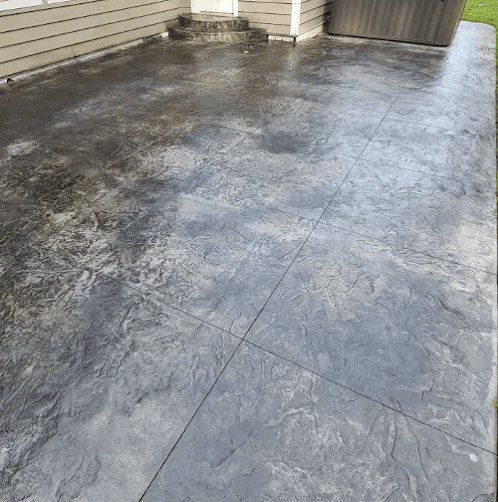
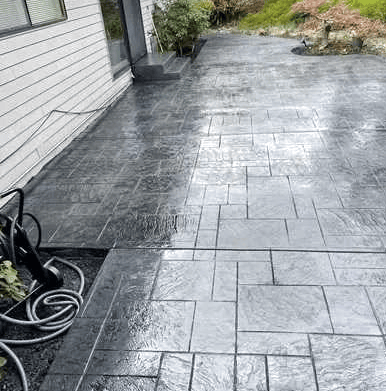
If you want the look of stone, brick, or tile without the higher cost or maintenance, stamped concrete pool decks are worth a close look. We press textured mats into the fresh concrete to create patterns that mimic natural materials. The result can look quite refined, especially when paired with integral color or a release agent. We use stamping mats and color systems from trusted brands like Brickform and Solomon Colors to give you consistent, repeatable results. Stamped concrete also works well as a concrete overlay for pools when you want to refresh an existing deck without a full tear-out.
Exposed Aggregate for Texture and Visual Depth
Exposed aggregate concrete is poured with decorative stone mixed in, and the top layer of cement paste is washed away before it cures fully. What is left is a surface with natural texture and visual interest. The embedded stone gives it grip, which makes it a practical choice for outdoor pool area flooring where safety is a concern. It also tends to hide surface wear well over time. The look varies depending on the stone type and size we use, so we can show you samples before anything gets poured.
Colored and Stained Concrete Options
Color can be added to concrete in a few different ways. Integral pigments are mixed directly into the concrete, so the color runs through the full slab rather than sitting only on the surface. Acid stains and water-based stains are applied after the concrete cures and react with the surface to create tones that look more natural and varied. We source pigments from Solomon Colors and L.M. Scofield, which give us a wide range of earth tones and custom shades. These decorative concrete options can help your pool deck feel like a natural extension of your home rather than a plain gray slab.
Decorative Scoring and Pattern Options
Scoring involves cutting shallow lines into cured concrete using a concrete saw or angle grinder. These cuts can create geometric patterns, borders, or designs that add visual structure to an otherwise plain surface. Scoring is often combined with stain or color to make the pattern stand out. It is also useful for pool deck designs where you want the look of large-format tile or flagstone without the grout lines and joints that collect dirt and pool chemicals.
Heat-Reducing and Light-Colored Finishes for Hot SC Summers
Greenville summers are hot, and a dark concrete deck in direct sun can become uncomfortable to walk on by midday. Light-colored finishes and certain durable poolside options reflect more sunlight and absorb less heat than darker surfaces. We can work with light integral pigments, heat-reflective sealers, or naturally pale aggregate blends to keep surface temperatures more manageable. This is a straightforward consideration we build into our finish recommendations for any pool project, especially for families with young children who spend long days outside near the water.
No matter which finish you choose, how it performs over time depends on proper surface preparation, the right concrete mix, and a quality sealer applied at the correct time. Each of these finish options also plays a direct role in how safe your deck will be day to day, which brings us to the safety features that every concrete pool deck should include.
A few years back, we took on a pool deck project for a family over in the Taylors area, just outside Greenville. It seemed straightforward at first. They wanted a clean, brushed concrete deck around their in-ground pool, and we had done dozens of similar jobs before. But this one threw us a curveball we did not see coming.
About halfway through the pour, the sky opened up. Now, rain during a concrete pour is not just an inconvenience. Water mixing into fresh concrete changes the water-to-cement ratio, and that weakens the final slab. We are talking about cracking, scaling, and a surface that would not hold up the way it should. For a pool deck that gets foot traffic, pool chemicals, and the kind of heat we see here in Greenville every summer, a weak slab is a real problem.
We had to act fast. Our crew covered the poured sections with plastic sheeting while two of us kept working the unfinished areas as quickly as we safely could. We also had to make a judgment call on one section that took on too much water. We stopped, removed that portion, and started fresh once the weather cleared. It cost us time and some materials, but we were not willing to hand you a deck that would fail in two or three years.
When the project was done, the deck came out level, smooth, and solid. The family has been using it every summer since. That job reminded us why having over 20 years of concrete experience matters. You learn to make the right call even when things go sideways.
Safety Features of Concrete Pool Decks
A pool deck sees a lot of wet, bare feet, which makes safety one of the first things we talk about with homeowners across Greenville. The good news is that concrete gives us a lot of options for building a deck that looks great and keeps your family safer around the water. Here is a closer look at how we approach each part of that.
Slip-Resistant Surface Textures and Coatings
When concrete is finished correctly, it can be one of the most dependable slip-resistant concrete surfaces you can put around a pool. We use several approaches depending on your preferences and budget. A standard broom finish pulls fine lines across the surface while the concrete is still workable, giving bare feet something to grip. Exposed aggregate concrete takes that further by revealing the natural texture of the stone within the mix. Stamped concrete pool decks can also be built with slip resistance in mind by choosing patterns with enough surface variation to reduce skidding. For existing decks, a textured coating or a water-based acrylic sealer with a non-slip additive can improve grip without a full tear-out. Whatever direction you go, we make sure the finish holds up to pool chemicals and the summer heat we get here in the Upstate.
Proper Grading and Drainage to Prevent Standing Water
Standing water is a hazard on any pool deck, and it is a common problem when grading is done incorrectly. We design every deck with a 2% drainage slope, which moves water away from the pool edge and toward drains or landscaped areas without making the surface feel tilted underfoot. Here in Greenville, we also deal with Piedmont soils and red clay that do not drain the way sandy soils do, so subgrade prep matters a great deal. We use a laser level during layout and a compacted gravel base to create a stable foundation that holds its grade over time. Proper pool deck drainage solutions like channel drains or area drains can be worked into the design where the yard layout calls for them, keeping water moving and reducing slip hazards after heavy rain.
ADA Accommodations Including Ramps and Tactile Surfaces
Some homeowners ask about making their pool area more accessible, whether for aging family members or guests with mobility needs. Concrete works well for this because it can be formed and finished in almost any shape. We can pour smooth, low-slope ramp transitions where needed and add tactile surface treatments to mark changes in grade or direction. These features can be built into new pool deck designs from the start or added as part of a concrete overlay for pools when resurfacing an older deck. Every situation is different, so we walk through your specific needs during the on-site consultation.
Handrail Embeds and Edge Detailing Around the Pool
Handrail posts need solid anchoring, and concrete is one of the best materials for that. We set embeds and sleeves before the pour so posts are locked into the slab rather than surface-mounted after the fact, which gives them the strength they need long term. Edge detailing is another area where we pay close attention. The transition between the deck and the pool shell, often called concrete pool coping, needs to be tight, properly sloped, and finished in a way that sheds water back onto the deck rather than into the pool structure. We use polyurea joint filler at expansion points to keep that transition flexible and weathertight. Getting these details right from the start prevents water intrusion and reduces long-term maintenance.
All of these safety features rest on one foundation: concrete that is mixed, placed, and cured properly for our local conditions. That brings us to how we think about durability and weather performance here in Greenville.
Durability and Weather Performance in Greenville, SC
How Concrete Holds Up to Greenville's Heat, Humidity, and UV Exposure
Greenville summers are no joke. Between the heat, humidity, and direct sun baking your pool deck from morning to evening, you need pool deck materials that can take the punishment year after year. Concrete holds up well in these conditions, especially when we use light-colored finishes or textured concrete finishes that reflect heat instead of absorbing it. This makes a real difference when you're walking barefoot from the water to a lounge chair. We also apply quality sealers, including products like BASF MasterSeal and Euclid Chemical lines, that resist UV fading and keep the surface looking clean longer.
Freeze-Thaw Considerations and Proper Concrete Mix Design
Greenville sits in the Piedmont, and while our winters are mild compared to states further north, we do see occasional freeze-thaw cycles that can stress a poorly mixed slab. The red clay and expansive clay soils common throughout areas like Berea and Sans Souci add another layer of challenge. We use a minimum of 4000 PSI concrete with a controlled water-cement ratio of around 0.45 to limit porosity. Adding fiber mesh reinforcement and placing the slab over a properly compacted subgrade and a solid gravel base reduces the risk of cracking and settling. We follow ACI 308 curing standards to make sure the slab reaches full strength before it sees any load.
Chemical and Chlorine Resistance with the Right Sealers and Finishes
Pool decks take constant exposure to splashed chlorine water, sunscreen, and cleaning products. Without the right protection, concrete can show staining and surface wear faster than it should. We use penetrating sealers and solvent-based acrylic sealers that create a barrier against chemical absorption. For concrete pool resurfacing projects or new slip-resistant concrete surfaces, we choose finishes and sealers compatible with the pool environment. A sodium silicate sealer works well for hardening the surface, while a polyurethane sealant is a good choice for joint areas where movement is a concern.
Resistance to Heavy Foot Traffic and Pool Furniture
A pool deck gets used hard. Chairs dragging across the surface, wet feet, kids running, and the weight of outdoor furniture all add up over time. Durable poolside options like exposed aggregate concrete and broom finish concrete are tough enough to handle daily wear without showing it quickly. We size our slabs at a minimum 4 inch thickness, stepping up to 6 inch thickness in areas with heavier loads. Proper control joint spacing at around 10 foot intervals keeps random cracking from forming under that ongoing stress. With over 20 years of combined concrete experience and more than 10 years working right here in Greenville, we know how to build a deck that holds up season after season.
Once we know your deck will perform well over time, the next step is understanding exactly how we put it all together from start to finish.
The Installation Process
Site Assessment, Measurement, and On-Site Consultation
Before we pour a single yard of concrete, we visit your property to take accurate measurements and look closely at the ground conditions around your pool. Greenville's Piedmont soils and red clay can behave unpredictably under a slab, so we check for soft spots, fill soil, or drainage issues early. During this visit, we also walk through pool deck designs, finish choices, and edge details with you so there are no surprises once work begins.
Subgrade Preparation and Forming
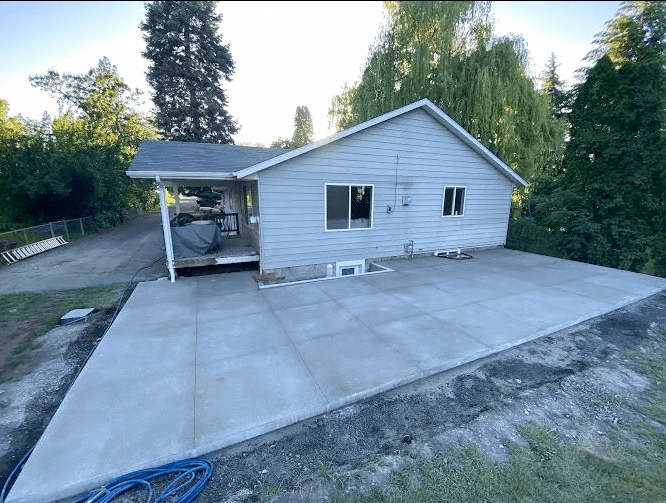
Good concrete starts below the surface. We excavate to the correct depth, compact the subgrade with a plate compactor, and lay a minimum 4-inch gravel base to support the slab and encourage drainage. Forms are set to hold a 2% drainage slope, directing water away from the pool and your home's foundation. We place #4 rebar or wire mesh according to the slab design before a single truck arrives.
Pouring, Finishing, and Curing the Concrete
We typically use 4000 PSI concrete mixed to a low 0.45 water-cement ratio, which holds up well against pool chemicals and Greenville's occasional freeze events. After the pour, crews use a concrete power screed and bull float to level the surface, then apply your chosen finish, whether that is broom finish concrete, exposed aggregate concrete, or stamped concrete. Control joints are cut at 10-foot spacing to manage cracking. Once finished, we apply a curing compound following ACI 308 standards and allow a full 28-day cure time before recommending heavy use. A quality sealer, such as a solvent-based acrylic sealer or sodium silicate sealer, is applied to protect against staining and pool chemical exposure.
Typical Project Timeline and What Affects It
Most residential pool deck projects in areas like Thornblade or Hollingsworth Park take between three and seven working days from prep to final seal. The actual length depends on the size of the deck, the complexity of the finish, weather conditions, and whether we encounter unexpected soil issues. Rain delays are common in the Upstate, and we build that buffer into every schedule we share with you.
How We Minimize Downtime for Your Household During Installation
We organize the job in stages so your yard and pool access are disrupted as little as possible. Equipment like the skid steer and concrete pump truck is staged to avoid blocking driveways or damaging landscaping. We keep the site clean at the end of each workday and communicate with you clearly about what is happening and when each phase will wrap up.
Once your deck is finished and cured, the next step is making sure everything meets local requirements. That means understanding what permits are required and which codes apply in Greenville, SC.
Built on Experience, Serving Greenville for Over 10 Years
We are a concrete contractor based in Greenville, SC, and we have been pouring and finishing concrete in this area for over 10 years. Our crew brings more than 20 years of combined hands-on experience to every job, from small residential repairs to large commercial pours.
Working in Greenville means we know this area well. We understand the local soil conditions, the humidity that comes with South Carolina summers, and how the seasonal temperature swings here can stress a concrete surface if the mix and curing process are not handled correctly. That kind of local knowledge matters on every job we take on, whether we are installing a driveway in Simpsonville, a pool deck in Taylors, or a commercial slab in downtown Greenville.
We handle the full range of concrete work. That includes driveways, patios, garage floors, pool decks, sidewalks, foundations, retaining walls, stamped and decorative concrete, concrete cutting and removal, resurfacing, sealing, and staining. We also work on commercial and industrial projects, including parking lots, warehouse floors, and ADA-compliant ramps and sidewalks.
When you hire us, you get a crew that shows up prepared. We handle permits, site prep, forming, pouring, finishing, and cleanup. We carry insurance and stand behind our work with a written warranty. You will know exactly what is included before we start, and we keep you informed throughout the project.
If you have a concrete project coming up and want to know what it will take to get it done right, we are glad to come out, take a look, and give you a free estimate.
Permitting and Code Requirements in Greenville, SC
Before we pour a single yard of concrete, we take time to understand what the local rules require for your specific project. Pool deck work in Greenville is not always a simple pour-and-go job. Depending on the scope of work, permits may be required, and skipping that step can lead to fines, failed inspections, or problems when you go to sell your home.
When a Permit Is Required for a Pool Deck in Greenville
In Greenville County, most new pool decks require a building permit through Greenville County Building Codes and Permits or the City of Greenville Building Permits Office, depending on where your property sits. Generally, any new concrete structure attached to or surrounding a pool, any work that changes drainage patterns, or any project that affects an existing pool barrier or fence line will trigger a permit requirement. Resurfacing an existing deck with a concrete overlay for pools may or may not require a permit depending on depth of work and scope. We always check before we start.
Local Inspection Process and What Inspectors Look For
Once a permit is issued, inspectors from Greenville County Development Standards or the City will typically review the project at key stages. They check things like subgrade preparation, reinforcement placement, slab thickness, and proper slope. For pool decks, a 2% drainage slope away from the pool and house is a standard expectation. Inspectors may also look at how pool deck drainage solutions are handled, how the deck ties into existing coping or pool shell, and whether any barriers meet local code under the ICC Building Code and SC Building Codes Council guidelines.
How We Handle Permitting on Your Behalf
With over 10 years working in Greenville, we know the permit process well. We hold our SC Contractor License and carry full insurance, so we are set up to pull permits directly. We prepare the necessary documents, submit the application, and schedule inspections at the right stages. You do not have to navigate county offices or figure out which jurisdiction covers your address. We take care of that from the start so your project moves forward without delays.
Once your deck passes final inspection, we walk you through the finished work and talk through sealing, curing, and upkeep. If your existing pool deck is showing wear or damage rather than starting fresh, that brings up a separate set of questions around repair and resurfacing options worth covering in detail.
Repairing and Resurfacing Existing Pool Decks
Signs Your Current Pool Deck Needs Repair or Replacement
Not every aging pool deck needs to be torn out and rebuilt. But knowing when yours has crossed a line from cosmetic wear into structural trouble is important. We see a lot of pool decks around Greenville that show common warning signs: wide or deepening cracks, surface flaking, uneven sections that create trip hazards, or areas where water pools instead of draining away from the pool and house. The red clay and expansive clay soils common in the Piedmont region can shift and settle under a slab over time, especially in spots where the subgrade was not compacted well during the original pour. If you notice your deck lifting, settling, or separating at the joints, those are signs worth having someone look at before the damage spreads.
Patching and Localized Crack Repair Options
When damage is limited to specific areas, targeted repairs often make sense. We use bonding agents and compatible patching materials to fill cracks and spalled sections in a way that holds up to foot traffic, pool chemicals, and Greenville's summer heat. Polyurea joint filler works well for control joints that have widened or failed, and it stays flexible enough to handle minor movement without breaking down. For surface cracks that do not go all the way through the slab, routing and sealing with a quality polyurethane sealant keeps water from working its way in and making things worse. We keep patches tight to the original slab profile so the surface stays flat and the 2% drainage slope we look for is not disrupted.
Resurfacing and Overlay Solutions to Refresh an Older Deck
If your pool deck is structurally sound but looks worn, faded, or dated, concrete pool resurfacing through a bonded overlay is often the right call. A concrete overlay for pools can be applied in a thin layer over your existing slab, giving you access to decorative concrete options like stamped patterns, exposed aggregate, or textured concrete finishes without the cost or time of a full replacement. Products from manufacturers like Brickform and L.M. Scofield are designed specifically for this kind of work and hold up well to chlorine exposure and UV. We prepare the surface thoroughly before any overlay goes down, which is the step that determines whether a resurfacing job lasts or peels within a couple of seasons.
When Full Replacement Makes More Sense Than Repair
Sometimes the honest answer is that repair or resurfacing will only delay the inevitable. If your slab has deep structural cracks, widespread settlement, failing reinforcement, or a subgrade that was never properly prepared, putting a new surface over the top just covers up the problem. We have worked on decks throughout Chanticleer, Thornblade, and Botany Woods where the original work was done without adequate base preparation, and the slabs had moved too far to be corrected without starting over. When that is the case, we pull the old concrete, regrade and compact the subgrade, and pour a new slab built to the specs your deck should have had from the beginning, typically at 4000 PSI compressive strength with proper reinforcement and 10 foot control joint spacing to manage future movement.
Whether your deck gets a patch, a fresh overlay, or a full replacement, the next thing to think about is how you protect it going forward. Sealing, routine cleaning, and scheduled maintenance are what keep any concrete pool deck looking and performing well for the long run.
Maintenance, Sealing, and Long-Term Care
A concrete pool deck is one of the lower-maintenance pool deck materials you can choose, but it still needs some regular attention to stay in good shape. The good news is that keeping it clean and protected is straightforward when you know what to do and stay on a simple schedule. With over 20 years of combined concrete experience and more than 10 years working right here in Greenville, we have seen what holds up and what does not in our local climate.
How to Clean Your Concrete Pool Deck
Routine cleaning is simple. A regular rinse with a garden hose removes most debris and prevents buildup. For deeper cleaning, a pressure washer works well on broom finish concrete and exposed aggregate concrete surfaces. Use a concrete degreaser for sunscreen and oil spots, and an efflorescence cleaner if you notice white mineral deposits appearing near the water line or joints. Avoid bleach-heavy cleaners that can break down your sealer faster than normal. We recommend cleaning your deck at least twice a year, and more often during heavy pool season.
Sealing Recommendations and Resealing Schedule
Sealing is one of the most important steps in protecting your investment. Depending on the finish, we typically apply either a water-based acrylic sealer or a solvent-based acrylic sealer after the initial 28-day cure time. For stamped concrete pool decks, a Brickform or L.M. Scofield finish sealer helps preserve color and texture. Penetrating epoxy sealer works well on exposed aggregate surfaces. Most decks in the Greenville area benefit from resealing every two to three years. Our summers are hot and sunny, and UV exposure along with pool chemical splash-back will wear down a sealer coat over time. Catching it early is much less costly than letting the surface degrade.
Preventing Stains, Fading, and Surface Wear
Greenville sits in the Piedmont region, and our red clay soil means any runoff that reaches your deck can leave stubborn rust-toned staining. Keeping your drainage slope at roughly a 2% grade and maintaining clean gutters and borders around the deck helps a lot. For slip-resistant concrete finishes like textured concrete finishes and exposed aggregate, avoid dragging metal furniture directly on the surface since it can scratch the sealer and leave marks. Rubber-tipped furniture legs make a real difference. Pool chemicals also affect surface appearance over time, so wiping up spills quickly and rinsing the deck after backwash discharge protects both color and the sealer coat.
Warranty Coverage and What It Includes
We stand behind our work. Our warranty covers workmanship defects including problems with joint layout, surface finish quality, and structural issues related to how the slab was placed and cured. What a warranty typically does not cover includes damage from tree roots, ground movement caused by fill soil or expansive clay beneath the slab, or surface wear from improper cleaning products. We follow ACI 301 standards during installation and use mixes with a minimum 3000 PSI compressive strength, which gives you a solid foundation for a long service life. Before we close out any job, we walk you through the maintenance steps specific to your finish so you know exactly what to expect.
Understanding what goes into caring for a pool deck is closely tied to understanding what it costs to build one right. Next, we will break down typical pricing for concrete pool deck projects in Greenville so you have a clear picture before you request a quote.
Cost and Pricing for Concrete Pool Decks in Greenville, SC
Understanding what goes into the cost of a concrete pool deck helps you plan your budget and make better decisions. We have been pouring concrete in Greenville for over 10 years, and we know that no two pool deck projects are priced exactly the same. Below we walk through the main cost factors, typical price ranges, and what to expect when you reach out to us for a quote.
Factors That Affect the Cost of Your Pool Deck Project
Several things influence what your project will cost. The size of the deck area is the most obvious one, but there is more to it than square footage alone. The condition of the ground beneath the slab matters a great deal here in Greenville. Our area sits on Piedmont soils that often contain red clay or expansive clay. These soils shift and drain poorly, which means proper subgrade preparation, compaction with a plate compactor, and sometimes a 4 to 6 inch gravel base are needed before any concrete is placed. Skipping those steps leads to settling and cracking, so we build them into every job.
The finish you choose also affects cost. A basic broom finish costs less than stamped concrete pool decks or exposed aggregate concrete. The complexity of the pool shape, the amount of edge and coping detail work, and any pool deck drainage solutions you need will each add to the total. If your project requires a permit through the City of Greenville Building Permits Office or Greenville County Building Codes and Permits, we factor that into your estimate as well. Reinforcement like #4 rebar or 6x6 wire mesh, a 4 inch or 6 inch slab thickness, and the concrete mix itself, whether 3000 PSI or 4000 PSI, all play a role in the final number.
Average Price Ranges for Different Finish Types
Concrete pool deck materials and finishes cover a wide range of price points. A plain broom finish typically runs on the lower end, while decorative concrete options like stamped patterns, colored overlays, or textured concrete finishes sit higher. Here is a general breakdown:
- Broom finish concrete: roughly $6 to $10 per square foot installed
- Exposed aggregate concrete: roughly $8 to $12 per square foot installed
- Stamped concrete pool decks: roughly $12 to $18 per square foot installed, depending on pattern and color complexity
- Concrete overlay for pools or resurfacing an existing deck: roughly $5 to $10 per square foot depending on prep work needed
- Concrete pool coping and edge detail work: priced per linear foot and varies by profile and finish
These ranges reflect typical Greenville-area projects. Your actual cost depends on the specifics of your site, the access we have with equipment like a concrete pump truck or skid steer, and any drainage or grading work required to achieve the recommended 2% drainage slope away from the pool and house.
How Concrete Compares in Lifecycle Cost to Other Materials
When you look at pool deck materials over time, concrete holds up well against natural stone, pavers, and wood composite decking. The upfront cost of concrete is generally lower than natural stone and comparable to or less than quality pavers. Over the years, concrete requires only periodic cleaning and resealing with a product like a solvent-based acrylic sealer or penetrating epoxy sealer to keep the surface protected from pool chemicals and UV exposure.
Pavers can shift and settle on Greenville's clay-heavy soils, leading to ongoing leveling costs and weed intrusion in the joints. Natural stone and wood both require more intensive maintenance in our humid upstate climate. A properly poured concrete deck with slip-resistant concrete surfaces, good joint layout, and the right sealer can last 25 to 30 years or more with routine care. That makes it one of the more cost-effective durable poolside options available for outdoor pool area flooring.
Getting an Accurate Estimate and What to Expect from the Quote Process
We provide on-site estimates at no charge. During that visit, we measure the area, assess the existing grade and soil conditions, look at the current pool deck if you have one, and discuss the pool deck designs and finishes you have in mind. We do not quote by phone alone because too many variables, like soil conditions, drainage needs, and access, affect the price in ways that only a site visit can reveal.
After the visit, we put together a written estimate that breaks down materials, labor, reinforcement, finish type, any drainage work, and permitting fees if applicable. We follow ACI 301 standards for concrete specification and ACI 308 guidelines for curing, so our estimates reflect the full scope of work needed to do the job right. You will not find hidden charges added after you sign. If anything changes during the project, we talk with you about it before moving forward.
Payment and Contract Terms We Offer
We keep our payment and contract terms straightforward. Typically, we ask for a deposit at the time you sign the contract, a progress payment at the point of concrete placement, and a final payment upon your approval of the completed work. We do not ask for full payment upfront, and we put everything in writing so you know exactly what is included.
Our contracts outline the scope of work, materials, finish type, project timeline, and warranty terms. We carry full liability insurance and hold our SC Contractor License, so you are protected throughout the project. We are happy to walk through the contract with you line by line before you sign anything.
When you are ready to talk about your pool deck project, we are ready to come out and take a look. That local knowledge and hands-on experience is exactly what we bring to every job we do for homeowners across Greenville.
Why Choose Us for Your Greenville Pool Deck Project
When you are looking for someone to build or update a concrete pool deck in Greenville, you want a crew that knows the work, knows the area, and will stand behind what they pour. That is what we bring to every project.
Our Experience Pouring Concrete and Working in Greenville
We have over 20 years of combined experience pouring concrete, and we have been working right here in Greenville for more than 10 years. In that time, we have seen how Piedmont soils and the red clay common across this area behave under a slab. We know how to prepare a compacted subgrade properly so your deck does not settle or crack down the road. We work with 4000 PSI concrete on most pool deck projects, using fiber mesh reinforcement and correct control joint spacing to give you a surface built to last through South Carolina's heat and the occasional freeze we see in the Upstate. Whether you are in Thornblade, Hollingsworth Park, or closer to Augusta Road, we have poured pool decks in neighborhoods throughout the Greenville area.
Licensing, Insurance, and Local Code Knowledge
We carry our SC Contractor License and maintain full insurance coverage on every job. We are familiar with the requirements set by the City of Greenville Building Permits Office and Greenville County Building Codes and Permits, so we handle permitting correctly from the start. We follow ICC Building Code and SC Building Codes Council standards, and we understand the inspection process so you do not run into delays or costly corrections after the work is done.
Our Portfolio of Completed Pool Decks in the Greenville Area
We have completed pool decks ranging from simple broom finish concrete to stamped concrete pool decks with color and texture work. Our portfolio includes projects with exposed aggregate concrete, decorative scoring, and slip-resistant concrete finishes suited for barefoot walking in the summer heat. We are happy to walk you through photos of past work so you can get a feel for the pool deck designs and finishes we are capable of delivering.
What Our Past Customers Say About Working With Us
Our customers in areas like Verdae, Pebble Creek, and Botany Woods have shared that what stood out most was straightforward communication, accurate timelines, and a finished product that looked exactly as discussed. We take that kind of feedback seriously because our reputation in this community matters to us more than any single job.
How to Schedule Your On-Site Consultation
Getting started is simple. Reach out to us and we will set up a time to come to your property, take measurements, look at your existing pool surround, and talk through your goals. We will cover pool deck materials, drainage, finish options, and any permitting needs specific to your location in Greenville County or the City of Greenville. From there, we provide a clear written estimate with no surprises. Everything covered in this guide comes together at that consultation, and we look forward to helping you build a pool deck you will be satisfied with for years to come.
Ready to Get Started on Your Greenville Pool Deck?
Why Concrete Is a Smart Choice for Your Pool Area
When it comes to pool deck materials, concrete stands out as one of the most practical and versatile choices for Greenville homeowners. Whether you want the look of stamped concrete pool decks, the texture of exposed aggregate, or a simple broom finish for everyday durability, concrete gives you real options that hold up in our Upstate South Carolina climate. It handles hot summers, occasional freezes, pool chemicals, and heavy foot traffic without falling apart. With the right finish and sealer, your deck stays looking good for years and costs less to maintain than most alternatives.
Beyond looks, concrete gives you control over drainage, slip resistance, and how the deck connects to your pool coping and surrounding landscape. Proper grading at a 2% drainage slope keeps water moving away from your home and pool equipment. Slip-resistant concrete finishes keep your family safer around wet surfaces. And with options like a concrete overlay for pools or concrete pool resurfacing, you do not always need to start from scratch if your existing deck needs attention.
A Quick Look at What You Get When You Work With Us
We have spent over 20 years pouring concrete and more than 10 of those years working specifically in Greenville and the surrounding area. We know the Piedmont soils, the red clay subgrade conditions, and what it takes to build a deck that does not crack, settle, or wear out ahead of schedule. Here is what working with us means for your project:
- Proper subgrade preparation and compaction suited to Greenville's expansive clay soils
- Correct concrete mix design, including 4000 PSI concrete and fiber mesh reinforcement where your project calls for it
- Accurate slope and pool deck drainage solutions designed to protect your yard and foundation
- A full range of decorative concrete options including stamped, stained, exposed aggregate, and textured concrete finishes
- Safe, code-compliant work backed by our SC Contractor License and knowledge of requirements from the City of Greenville Building Permits Office
- Proper curing practices and quality sealers that extend the life of your surface and resist pool chemical damage
- Honest estimates with no hidden costs and clear timelines so you know what to expect
- Workmanship warranty and full contractor insurance for your peace of mind
- Local reputation built through projects in neighborhoods like Thornblade, Hollingsworth Park, Botany Woods, and across the Greenville area
Next Steps to Get Your Project Moving
Whether you are planning a brand new pool deck, exploring outdoor pool area flooring options, or looking into concrete pool resurfacing for an aging surface, the next step is simple. We come out to your property, take a look at the space, talk through your options, and give you a clear, no-obligation quote. There is no pressure and no guesswork. You get a straight answer on what the work involves, what it will cost, and when we can get started.
Fill out the form below or give us a call today to schedule your free on-site consultation. We are here to answer your questions and help you move forward with confidence.
Greenville SC Concrete
220 N Main St
Greenville, SC 29601
Business Hours
| Mon | 7:00 AM – 10:00 PM |
| Tue | 7:00 AM – 10:00 PM |
| Wed | 7:00 AM – 10:00 PM |
| Thu | 7:00 AM – 10:00 PM |
| Fri | 7:00 AM – 10:00 PM |
| Sat | 7:00 AM – 10:00 PM |
| Sun | 7:00 AM – 10:00 PM |