Concrete Steps & Stairs in Greenville
Safe Concrete Steps & Stairs in Greenville, SC
Who We Are and Where We Serve in Greenville, SC
We provide concrete steps and stair services throughout Greenville, SC and the surrounding Upstate region. Whether you are in North Main, Augusta Road, Overbrook, or out in Chanticleer or Botany Woods, we can come to you. With over 20 years of combined experience pouring concrete and more than 10 years working right here in Greenville, we know this area well. We are locally based, fully licensed through the SC Contractor License program, and carry the insurance and credentials you should expect from any contractor you invite onto your property.
Common Problems Homeowners Face with Aging or Damaged Steps
Cracked risers, spalling treads, and steps that have shifted or settled over time are some of the most common issues we see on properties across Greenville. If your front steps feel uneven underfoot, show surface flaking, or have developed visible cracks, those are signs the structure may already be compromised. Worn steps are not just an eyesore. They are a real safety risk for anyone using them, especially in wet weather. Many homeowners try to patch the surface and move on, but surface patching rarely solves the underlying problem. In most cases, a proper evaluation of the subgrade, the reinforcement, and the concrete itself is the only way to know whether repair or full replacement is the right call. We can walk through that with you honestly when we come out for your estimate.
Local Knowledge: Greenville Neighborhoods, Soil Conditions, and Weather Factors That Affect Concrete Stairs
Greenville sits on the Piedmont Plateau, and the red clay soil and saprolite common throughout this area present real challenges for concrete flatwork and steps. Expansive clay shifts with moisture, and when the subgrade beneath your steps moves, the concrete above it moves too. That is how you end up with settled, cracked, or tilted stairs even on relatively young structures. Greenville's summers bring high humidity and heavy rain events, while winter months can dip cold enough for freeze-thaw cycling to open up surface cracks over time. Neighborhoods closer to the Reedy River and Brushy Creek can also see drainage issues that put added stress on exterior concrete. We factor all of this into how we prepare the site, select the right concrete mix, and finish the surface. Understanding these poured concrete stair advantages Greenville SC homeowners benefit from starts with knowing the ground you are building on. Homes along Wade Hampton Boulevard and Pleasantburg Drive, for example, often sit on compacted fill or residual soil that requires more attention during site prep than people expect. We have seen it all working in this area, and we build accordingly.
Frequently Asked Questions from Greenville Homeowners About Concrete Steps
Do I need a permit for new concrete steps in Greenville? It depends on the scope of the work. Structural exterior stairs often require a permit through the City of Greenville Building Permits Office or the Greenville County Building Safety Department. We can help you understand what applies to your project before work begins.
How long does concrete stair installation take? Most residential stair projects take one to two days for forming and pouring, followed by a cure period. You should plan on keeping foot traffic off new steps for at least 24 to 48 hours, with full strength developing over a 28-day cure time.
What finish options do I have? You have several. A broom finish concrete surface gives you a clean, slip-resistant look that holds up well outdoors. If you want something more decorative, stamped concrete and exposed aggregate concrete are both options we work with regularly. We can also apply an acrylic concrete sealer or penetrating epoxy sealer after curing to protect the surface long term.
Can my steps be made ADA compliant? Yes. We follow ADA Standards for Accessible Design and IRC 2021 guidelines when required. This includes proper riser heights, tread depths, handrail placement at a 36-inch minimum height, and landing dimensions. If accessibility is a priority for your household, we will plan the design around that from the start.
What if my steps just need repair instead of replacement? We will tell you honestly either way when we come out. Some concrete stair renovation work is straightforward. Other situations, especially where the base has shifted or the reinforcement has corroded, call for full replacement. There is no benefit to you or to us in repairing something that will fail again in a year.
Once you understand why properly built concrete steps hold up so well in conditions like these, it becomes easier to see why the material itself is worth a closer look.
Why Concrete Is a Smart Choice for Steps and Stairs
When it comes to building steps and stairs that hold up over time, concrete is one of the most reliable materials you can choose. We have seen firsthand how well it performs on projects across Greenville, from older homes along Augusta Road to newer builds in subdivisions like Hollingsworth Park and Hartness. Whether you are replacing worn wooden steps or starting fresh with outdoor concrete steps on a new build, the material brings a lot to the table.
Durability and Long-Term Performance Under Heavy Foot Traffic
Concrete handles repeated use without breaking down the way softer materials do. When we pour reinforced concrete steps using 4000 PSI concrete and properly placed #4 rebar, the result is a structure built to carry heavy loads day after day. Stairs at a commercial property near the Greenville Convention Center face very different demands than a front stoop in Botany Woods, but the same principles apply. Good mix design, proper reinforcement, and controlled curing all contribute to steps that stay strong for decades.
Low Maintenance Compared to Wood, Brick, and Other Materials
Concrete stair maintenance is straightforward. You do not need to paint, stain for preservation, sand, or replace rotted boards. A periodic cleaning and an application of an acrylic concrete sealer every few years is usually all it takes to keep the surface looking good. Compare that to wood, which needs regular upkeep, or brick, which can shift and loosen over time. With concrete, most of the work happens during installation, not after.
Weather and Moisture Resistance in the Greenville Climate
Greenville sits on the Piedmont Plateau, and the local soil, especially the red clay and expansive clay common throughout the area, can shift with moisture changes. That movement puts pressure on structures from below. Concrete handles this better than many alternatives when it is built right, with proper subgrade compaction, correct slope for drainage, and expansion joints placed where they belong. Our wet summers and occasional freezing temperatures in winter are manageable when the mix includes an air-entraining admixture and the surface is finished with drainage in mind.
Fire Resistance, Pest Resistance, and No Risk of Rot or Warping
Unlike wood, concrete does not rot, warp, or attract termites. That matters in the Upstate, where moisture and pests are year-round considerations. Concrete is also non-combustible, which adds a layer of passive safety to any home or building. These are not flashy selling points, but they are practical ones that add up over years of ownership.
Cost-Effectiveness Over the Life of the Project
The upfront cost of poured concrete stairs is often higher than wood, but the long-term picture looks different. You avoid the recurring costs of repainting, resealing for preservation, replacing boards, or dealing with pest damage. When you factor in a realistic lifespan and maintenance costs over time, concrete tends to come out ahead. That is true for a single-family home in Verdmont and for a commercial property along Woodruff Road alike.
Concrete performs well when it is installed correctly and given basic care over the years. But even the best concrete steps can develop problems over time, especially when early warning signs go unaddressed. Knowing what to look for is the first step toward keeping your stairs safe.
Signs Your Concrete Steps Need Repair or Replacement
After more than 10 years working on properties across Greenville, from Augusta Road bungalows to newer builds in Hollingsworth Park, we have seen what happens when concrete steps are left too long without attention. Catching problems early can save you a lot of money and keep your family safe. Here is what to look for.
Visible Cracking, Spalling, or Surface Deterioration
Hairline cracks are common and do not always mean trouble right away. But when cracks widen, multiply, or start to run through the full depth of a step, water can get in and weaken the structure over time. Spalling is when the surface flakes or pits off in chunks. This is common on older steps that were not finished with proper curing compounds or sealed with something like an acrylic concrete sealer. Greenville's mix of hot, humid summers and occasional winter freezes puts real stress on concrete that was not poured with the right mix or air-entraining admixture from the start.
Uneven or Sunken Steps That Create a Trip Hazard
The SC Building Code and IRC 2021 require a maximum riser height of 7 inches and a minimum tread depth of 11 inches. When steps settle unevenly, those measurements drift and the steps become a genuine trip hazard. Settlement here in Greenville often comes down to the soil. The red clay and expansive clay common throughout the Piedmont Plateau shift with moisture, and if the subgrade was not properly compacted before the pour, sinking is almost inevitable. If your steps have developed a noticeable lean or one tread sits lower than the others, that is worth addressing soon.
Crumbling Edges and Broken Corners
The edges and corners of concrete steps take the most impact from foot traffic and lawn equipment. When reinforcement like #4 rebar or welded wire mesh was not included or was placed too close to the surface, edges chip and break off faster. Crumbling corners are more than cosmetic. They create sharp surfaces and uneven footing, especially on outdoor concrete steps that see daily use.
Water Pooling or Drainage Problems Around the Steps
Steps should be poured with at least a 1/8-inch per foot slope so water runs away from the structure and your foundation. When that slope is wrong or the surrounding grade has shifted, water sits on the surface and works its way into cracks. Over time, this leads to erosion under the steps and can cause real damage to the area where your steps meet the house. If you notice standing water after rain or soft soil around the base of your steps, drainage is likely part of the problem.
When Repair Makes Sense Versus Full Replacement
Not every problem calls for a full tear-out. Surface spalling, minor cracks, and small broken edges can often be patched and sealed if the underlying structure is still sound. We look at the depth and pattern of the cracking, whether the steps have shifted, and how the reinforcement has held up before recommending anything. Concrete stair renovation through patching makes sense when damage is limited to the top layer. But if the steps have settled significantly, the rebar is corroding, or the geometry no longer meets code, replacement gives you a better long-term result. We have seen properties near Reedy River and throughout the North Main area where patching a compromised set of steps only delayed the same conversation by a year or two.
Once we understand what your steps are dealing with, we can walk you through exactly what work would fix it and what that involves from our side.
A few years back, we took on a concrete steps project for a homeowner over in the Travelers Rest area just north of Greenville. It seemed straightforward at first. The front entry needed a new set of steps leading up to the porch, and we had done dozens of similar jobs across Upstate South Carolina. But this one turned into a real test of what our team knows after more than 20 years of pouring concrete.
The problem started when we began digging out the base. About eight inches down, we hit a mix of red clay and loose fill dirt that someone had packed in years before. If you know anything about Greenville soil, you know that red clay shifts and swells when it gets wet, especially during our rainy spring seasons. Building concrete steps on top of unstable fill like that is a recipe for cracking and sinking over time. We had to stop, regroup, and come up with a better plan.
We ended up digging out an extra foot and a half deeper than originally planned and hauling in compacted gravel to create a solid, stable base. It added time and material cost to the job. We sat down with the homeowner and walked them through exactly what we found and why the extra work mattered. They appreciated the honesty, and we appreciated the chance to do it right.
Once the base was properly set, the pour and finishing went smoothly. Those steps have been holding up through Greenville summers and winters ever since. That job reminded us that what you do before the concrete is poured matters just as much as the pour itself.
Our Concrete Steps and Stairs Services in Greenville
We have been working on concrete steps and stairs across Greenville for over 10 years, and our crew brings more than 20 years of combined concrete experience to every job. Whether you are in Augusta Road, Botany Woods, or out near Pebble Creek, we know how the local soil conditions and climate affect concrete over time. The red clay soil and humidity here in the Piedmont Plateau region can be hard on exterior steps, which is why we pay close attention to subgrade preparation, proper mix design, and drainage from the very start.
New Concrete Step and Stair Installation
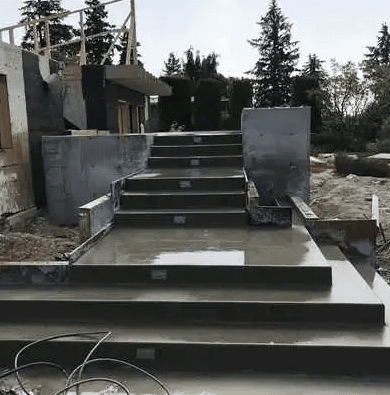
When we build new outdoor concrete steps, we start with compacted fill and a solid form layout so your stairs come out level, square, and built to last. We follow the SC Building Code along with IRC 2021 guidelines, including the 7-inch maximum riser height and 11-inch minimum tread depth, so your steps are safe from day one. We typically use 4000 PSI concrete with #4 rebar for residential work, placed and vibrated properly for full consolidation. A curing compound is applied after finishing to protect the surface during the 28-day cure period.
Repair and Resurfacing of Existing Steps
Cracked, spalling, or uneven steps are common on older homes throughout neighborhoods like North Main and Overbrook. Depending on the damage, concrete stair renovation through resurfacing can restore both the look and function of your existing steps without a full tear-out. We clean the surface, open any cracks, and apply a bonded overlay or patching system that ties into the original concrete. We can also apply an acrylic concrete sealer or penetrating epoxy sealer to help protect the surface going forward.
Full Replacement of Unsafe or Beyond-Repair Stairs
Some steps have settled too far, cracked through the core, or were never built correctly in the first place. When that is the case, resurfacing will not solve the underlying problem. We saw out and remove the old structure, regrade and compact the subbase, and pour reinforced concrete steps that are built right from the ground up. This is often the more cost-effective path over time compared to repeated patching.
Emergency Stabilization and Inspection Services
If your steps have shifted suddenly, a riser has collapsed, or you are concerned about a safety hazard before a repair can be scheduled, we offer on-site inspection and emergency stabilization. We will assess the structure, identify what caused the failure, and secure the area so it is safe to use in the short term while we plan the right fix.
Residential Versus Commercial Stair Solutions
Residential and commercial concrete stair installation are not the same job. Home entry steps typically involve smaller pours with simpler forming, while commercial projects near areas like the Greenville Convention Center or along Woodruff Road may require heavier reinforcement, ADA Standards for Accessible Design compliance, and coordination with the City of Greenville Building Permits Office. We handle both, and we carry our SC Contractor License and full liability insurance on every project.
Once we understand the scope of your project and the structural needs, the next consideration is how your stairs will look and feel underfoot. That is where design and finish options come in.
Design and Finish Options for Concrete Stairs
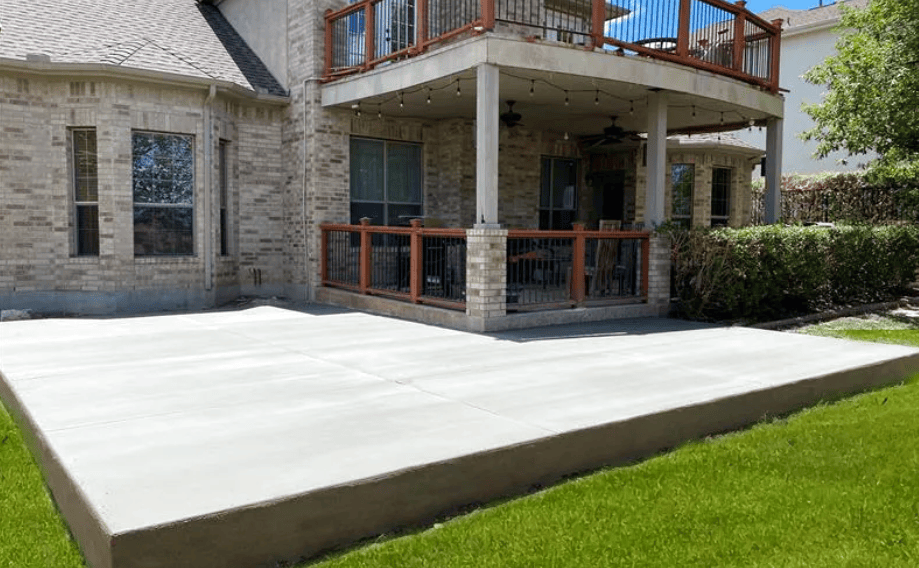
When we pour concrete stairs at a home in Greenville, one of the first things we talk about is how you want them to look and feel underfoot. Concrete gives you a wide range of choices, and the finish you pick affects both the appearance and the safety of your steps for years to come.
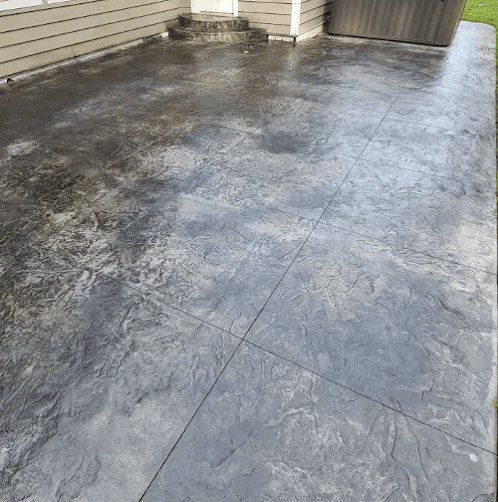
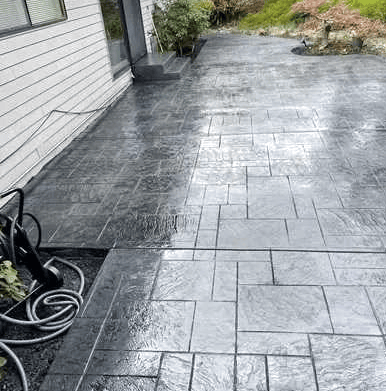
Stamped Concrete for a Decorative Look
Stamped concrete lets us press patterns into the surface while the mix is still workable. Popular choices include slate, cobblestone, and wood plank textures. If you live in a neighborhood like Augusta Road or Chanticleer where curb appeal matters, decorative concrete stairs can tie your entry into the overall look of your home and landscaping. We use texture mats and release agents from suppliers like Butterfield Color to get clean, consistent impressions across every tread and riser.
Colored and Stained Concrete Finishes
Color can be added to concrete in two ways. Integral pigment is mixed directly into the batch, giving you color all the way through. Acid stains or water-based stains are applied after the concrete cures, producing a more varied, natural look. Both methods work well in Greenville's climate, though we recommend sealing stained surfaces with an acrylic concrete sealer or penetrating epoxy sealer to protect the color from UV exposure and moisture.
Exposed Aggregate for Texture and Traction
With exposed aggregate, we wash away the top layer of cement paste before it fully hardens, leaving the crushed granite aggregate visible at the surface. This finish is one of the better choices for outdoor concrete steps because the rough texture naturally improves grip when the stairs are wet. It also fits in well with the landscaping styles common around areas like Botany Woods and Parkins Mill.
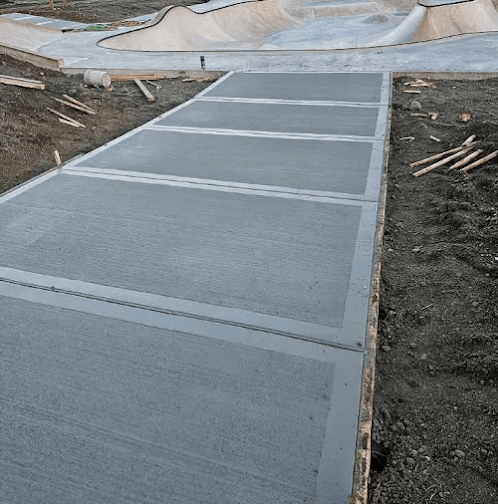
Broom Finish and Other Slip-Resistant Surface Options
A broom finish is the most practical choice for many homeowners. After we screed and float the surface, we drag a stiff-bristled broom across each tread while the concrete is still green. The result is a non-slip concrete surface with consistent texture that holds up well under foot traffic. For added protection, we can apply a concrete densifier or sodium silicate sealer, which hardens the surface and reduces wear over time. This approach meets the traction requirements outlined in the IRC 2021 and SC Building Code.
Matching Your Stairs to Your Existing Home Exterior
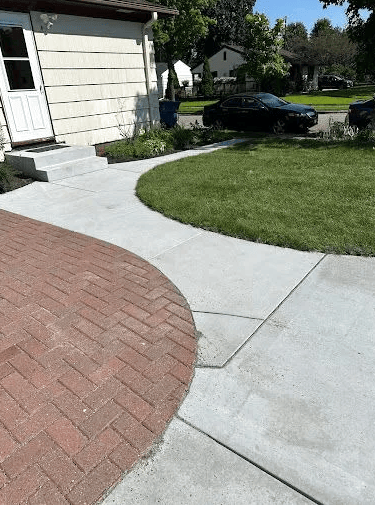
We take into account your siding color, trim, and any existing flatwork like a driveway or patio before we recommend a finish. A cohesive look between your poured concrete stairs and the surrounding concrete landscaping ideas you already have in place adds visual continuity and makes the whole entry feel intentional rather than patched together. We have worked on homes throughout Greenville for over ten years and know how different architectural styles across the area call for different approaches.
Once you have settled on a design direction, the next thing to think about is whether your stairs will meet current safety requirements. Finish and appearance matter, but proper riser heights, tread depths, and handrail placement are just as important for protecting the people who use your steps every day.
Safety Standards, Codes, and Accessibility
When we build concrete stairs in Greenville, following the right safety standards is not optional. It protects you, your family, your guests, and in the case of commercial properties, your customers and employees. We work to the IRC 2021, IBC 2021, and the SC Building Code on every project, and we know how those requirements apply to real job sites across the area.
Building Code Requirements for Riser Height and Tread Depth
The SC Building Code sets a 7-inch maximum riser height and an 11-inch minimum tread depth for most stairs. These numbers exist because small differences between steps cause people to trip. When we pour reinforced concrete steps, we lay out each riser and tread with a laser level before a single form goes up, so every step is uniform from top to bottom.
Handrail and Guardrail Requirements for Residential and Commercial Stairs
Residential stairs with four or more risers need a handrail. That rail must sit between 34 and 38 inches above the stair nosing. Commercial applications often require guardrails on open sides as well. We coordinate rail placement during the concrete stair installation phase so anchors are set correctly in the concrete rather than bolted in after the fact, which gives you a much more secure connection.
ADA Compliance and Accessibility Modifications
If your property needs to meet the ADA Standards for Accessible Design, we can integrate ramps, wider landings, and proper slope transitions into the overall design. A slope of 1:12 or gentler is required for accessible ramps, and surface texture matters too. A non-slip concrete surface with a broom finish or light exposed aggregate helps meet both ADA traction requirements and everyday safety needs, especially during wet Upstate weather.
Permits and Inspections Required in Greenville, SC
Whether your project falls under the City of Greenville Building Permits Office or the Greenville County Building Safety Department depends on your address. Most new concrete stair construction requires a permit, and some repair or replacement work does as well. We handle that process for you, including scheduling the required inspections so your finished stairs are documented and code-compliant. Skipping permits can create problems when you sell your property or file an insurance claim.
How Uniform Risers and Proper Treads Improve Safety
People adapt their stride to the first step they take on a staircase. If one riser is even a half-inch taller than the others, the body is not prepared for it, and that is when falls happen. Properly poured outdoor concrete steps with consistent geometry and a textured finish give you reliable footing in all conditions. We use a screed board and hand floats to bring each tread to the exact same elevation, and we apply a broom finish to add grip without making the surface rough enough to catch on shoes.
Once your stairs meet code and are built to last, the next thing most people want to know is what the actual work looks like from start to finish.
From Driveways to Foundations, We Cover Greenville
We are a concrete contractor based in Greenville, SC, and we have been pouring and finishing concrete in this area for over 10 years. Our crew brings more than 20 years of combined hands-on experience to every job, from small residential repairs to large commercial pours.
Working in Greenville means we know this area well. We understand the local soil conditions, the humidity that comes with South Carolina summers, and how the seasonal temperature swings here can stress a concrete surface if the mix and curing process are not handled correctly. That kind of local knowledge matters on every job we take on, whether we are installing a driveway in Simpsonville, a pool deck in Taylors, or a commercial slab in downtown Greenville.
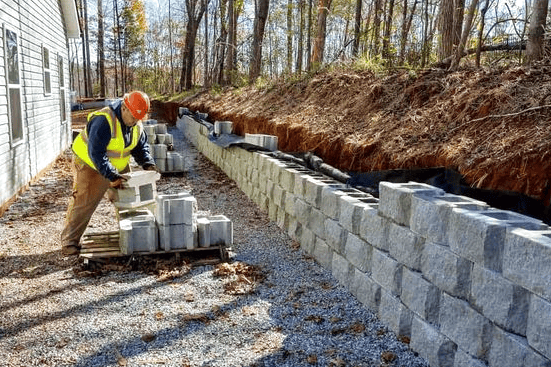
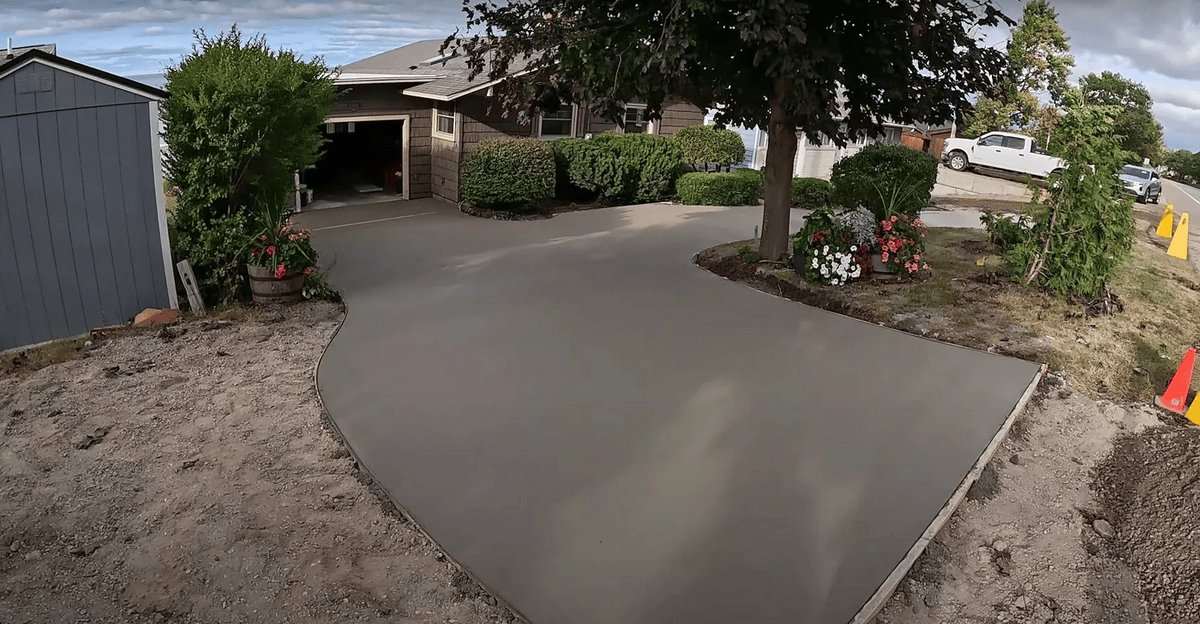
We handle the full range of concrete work. That includes driveways, patios, garage floors, pool decks, sidewalks, foundations, retaining walls, stamped and decorative concrete, concrete cutting and removal, resurfacing, sealing, and staining. We also work on commercial and industrial projects, including parking lots, warehouse floors, and ADA-compliant ramps and sidewalks.
When you hire us, you get a crew that shows up prepared. We handle permits, site prep, forming, pouring, finishing, and cleanup. We carry insurance and stand behind our work with a written warranty. You will know exactly what is included before we start, and we keep you informed throughout the project.
If you have a concrete project coming up and want to know what it will take to get it done right, we are glad to come out, take a look, and give you a free estimate.
The Installation Process: What to Expect
When you hire us for concrete steps in Greenville, SC, you get a crew with over 20 years of combined concrete experience and more than 10 years working right here in the Upstate. We want you to know exactly what happens from the first phone call to the final cure, so there are no surprises along the way.
Initial Consultation and On-Site Estimate
We start by coming out to your property for a free on-site estimate. We look at your existing entry, measure the grade change, check the soil conditions, and talk through your goals. Greenville sits on the Piedmont Plateau, and a lot of properties here have red clay soil or expansive clay underneath, which affects how we plan the subgrade. We also review what the City of Greenville Building Permits Office or Greenville County Building Safety Department will require for your specific project, including whether a permit is needed and what the SC Building Code says about riser heights and tread depth.
Site Preparation, Forming, and Grading
Good steps start well below the surface. We use a plate compactor to firm up the subgrade, and we bring in compacted fill where needed to prevent settling over time. We set forms carefully using a laser level so every riser and tread is straight, plumb, and square. Under IRC 2021 and SC Building Code guidelines, risers should be no more than 7 inches tall and treads no less than 11 inches deep. Getting this geometry right before the first yard of concrete arrives is what separates a safe set of steps from a trip hazard.
Pouring, Finishing, and Curing the Concrete
We typically use 4000 PSI concrete for steps, sourced from suppliers like CEMEX Greenville or Carolina Concrete, mixed to ASTM C94 standards. For outdoor concrete steps in Greenville's humid climate with occasional freezes, we add an air-entraining admixture to protect the surface. We place rebar, often #4 rebar at 18 inches on center, to give you reinforced concrete steps that hold up under daily foot traffic. After screeding and floating, we apply a broom finish for a non-slip concrete surface, or we can discuss stamped concrete or exposed aggregate if you want a more decorative look. Once placement is done, we apply a curing compound to hold moisture in and let the slab reach full strength over a 28-day cure time.
Timeline from Start to Finish and What Affects It
A straightforward residential stair project typically takes one to three days of active work, not counting cure time. What can extend that window includes permit processing through the City of Greenville Development Services, weather delays, the size of the staircase, and whether we need to remove and haul away old steps first. We will give you a realistic schedule during your estimate so you can plan around it.
Minimizing Disruption to Your Daily Routine During the Project
We understand that your front entry or back door may be your main way in and out of the house. Before we start, we talk through access so you know which entry to use while work is underway. We keep our equipment footprint tight, protect landscaping near the work area, and clean up each day before we leave. For most homes in neighborhoods like Augusta Road, North Main, or Botany Woods, the active work wraps up quickly enough that disruption stays minimal.
Once your steps are finished and cured, the next thing most homeowners want to know is what the project actually costs and what factors move that number up or down.
Pricing and Project Scope
Factors That Affect the Cost of Concrete Steps in Greenville
Several things influence what you will pay for concrete stair installation in Greenville. The size of your staircase is the most obvious factor, but site conditions matter just as much. Greenville sits on the Piedmont Plateau, where red clay soil and saprolite are common. These soils can shift and compress unevenly, which sometimes means extra subgrade preparation before we pour a single yard of concrete. Access to your site also plays a role. If a ready-mix truck from a local supplier like CEMEX Greenville or Carolina Concrete cannot get close enough, we may need a concrete pump truck, and that adds to your cost. The number of risers, whether you need landings, and any grading work around your entry all factor into the final number as well.
Typical Price Ranges for Repair Versus New Installation
Repair work on cracked or spalling outdoor concrete steps is generally less expensive than a full replacement, but not always. Surface patching and resealing with an acrylic concrete sealer or penetrating epoxy sealer can extend the life of steps that are structurally sound. However, if the base has settled or the risers no longer meet the 7-inch maximum riser height or 11-inch minimum tread depth required under the IRC 2021 and SC Building Code, a full replacement is the safer and more cost-effective path over time. New poured concrete stairs with standard broom finish typically cost less than decorative options, but we will walk you through both so you can make an informed decision.
How Size, Shape, and Finish Choices Affect Your Total Cost
A simple straight run of three or four steps costs less than a curved or wraparound design. Decorative concrete stairs finished with stamped concrete or exposed aggregate concrete require more labor and materials than a basic broom finish, so budget accordingly. Reinforcement choices also matter. We use #4 rebar or #5 rebar depending on the load requirements, along with fiber mesh reinforcement in many mixes to control cracking. A 4000 PSI concrete mix costs a little more than 3000 PSI, but for steps that see heavy foot traffic or are exposed to Greenville's humidity and seasonal temperature swings, the upgrade is usually worth it. Concrete stair finishing techniques like anti-slip textures or color staining add to the scope but also improve safety and curb appeal.
Getting an Accurate Quote and What Is Included
When you contact us for a quote, we come out to your property and look at the actual site conditions. We factor in subgrade preparation, formwork, reinforcement, the concrete mix, finishing, curing compound application, and cleanup. If your project requires a permit through the City of Greenville Building Permits Office or Greenville County Building Safety Department, we handle that process and include it in our scope. We also discuss handrail height requirements and whether your project needs to meet ADA Standards for Accessible Design. With over 20 years of combined experience and more than a decade working specifically in Greenville, we build quotes that reflect real conditions rather than best-case assumptions. That transparency carries over into how we handle licensing, insurance, and the warranties we stand behind.
Licensing, Insurance, and Warranties
Our Licensing and Insurance Credentials
We hold an active SC Contractor License and carry both general liability insurance and workers' compensation coverage on every job we take on in Greenville. That means if something unexpected happens on your property during a concrete stair installation, you are not left holding the bill. We also meet the standards set by the City of Greenville Building Permits Office and the Greenville County Building Safety Department, so permits are pulled correctly before any concrete is ever poured. Our team has over 20 years of combined experience working with reinforced concrete steps, and more than 10 of those years have been spent working specifically in and around Greenville neighborhoods like Augusta Road, North Main, and Botany Woods.
What Our Workmanship Warranty Covers
Our workmanship warranty covers defects in how the work was performed. That includes issues like uneven risers, structural cracking tied to poor forming or subgrade prep, and surface problems linked to finishing or curing errors. We follow concrete stair safety guidelines under the IRC 2021 and SC Building Code, including the 7-inch maximum riser height and 11-inch minimum tread depth requirements. If something we built does not hold up the way it should, we come back and make it right. That is what standing behind your work means to us.
Why Hiring a Licensed Local Contractor Matters
Greenville sits on the Piedmont Plateau, and the red clay soil and expansive clay conditions here can shift over time. A contractor who does not understand local soil behavior may skip proper subgrade compaction, which leads to settlement and cracking within just a few years. We know how to read these conditions and adjust our approach, whether that means deeper base prep or specifying 4000 PSI concrete instead of a lighter mix. Hiring someone licensed and local also means they are accountable to the same community you live in, which matters more than any short-term price savings.
Once your steps are built to code and properly finished, the next thing to think about is keeping them in good shape over the long term. Concrete is low-maintenance by nature, but a little attention goes a long way toward protecting your investment.
Maintenance and Long-Term Care for Concrete Steps
Concrete steps are built to last, but like any part of your home, they do better with a little routine attention. The good news is that concrete stair maintenance does not require much time or money. A few simple habits go a long way toward keeping your steps safe, solid, and looking good for decades.
Sealing Your Concrete Steps and How Often to Do It
Sealing is one of the most important things you can do to protect your investment. We typically recommend applying a quality sealer, such as a penetrating epoxy sealer or an acrylic concrete sealer, every two to three years depending on foot traffic and sun exposure. A good sealer keeps moisture from soaking in, which helps protect the surface from staining and surface wear. If your steps face west or get heavy afternoon sun along streets like Augusta Street or Wade Hampton Boulevard, you may want to check the sealer condition annually. You can do a simple water test: if water soaks in instead of beading up, it is time to reseal.
Cleaning Tips and Routine Upkeep
Keeping your outdoor concrete steps clean is straightforward. A stiff-bristle brush, warm water, and a mild detergent handle most dirt and organic buildup. For moss or mildew, which can develop in shaded areas common in older Greenville neighborhoods like North Main or Overbrook, a diluted solution of water and white vinegar works well without damaging the surface. Avoid harsh chemicals like undiluted muriatic acid for routine cleaning, as they can break down the surface over time. Rinse thoroughly after any cleaning to keep residue from settling into the pores.
Preventing Damage from Freeze-Thaw Cycles and Moisture
Greenville sits in the Piedmont Plateau region, where winters bring occasional freezing temperatures that cycle on and off. That freeze-thaw pattern puts stress on concrete surfaces, especially if moisture has worked its way in. Steps poured with air-entraining admixture and the right water-cement ratio are better equipped to handle this, but surface protection still matters. Avoid using rock salt or calcium chloride ice melt products on your steps. These accelerate surface scaling. Use sand for traction instead. Making sure water drains away from the base of your steps also reduces the risk of moisture working into the subgrade, which is especially important given the expansive clay soils found throughout much of Greenville County.
When to Call Us for a Repair Before Small Problems Get Bigger
Surface cracks, chipping edges, and small spalls are common over time and are usually easy to address early. The problem is that water gets into those openings and the damage grows, especially after a freeze. If you notice any cracking wider than a hairline, a riser or tread that feels loose, or a step that has begun to settle or tilt, reach out to us before the next wet season. Catching issues early almost always means a simpler repair rather than a full replacement. We have seen many situations across Greenville where a straightforward patch job handled promptly saved a homeowner the cost of tearing out and repuring an entire set of reinforced concrete steps. A quick inspection from us costs you nothing and gives you a clear picture of where things stand.
Knowing your steps are well maintained also means knowing who to call when something is off. That brings us to why so many Greenville homeowners come back to us when they need concrete work done right.
Why Greenville Homeowners Choose Us
Over 20 Years of Combined Concrete Experience
We have spent more than two decades working with concrete, and that time adds up in ways that matter on a real job site. We understand how to read a subgrade, pick the right mix, and finish a surface that holds up over time. When we pour reinforced concrete steps, we are not guessing at riser heights or tread depth. We follow IRC 2021 and SC Building Code standards, which call for a 7-inch maximum riser height and an 11-inch minimum tread depth. Getting those numbers right is what separates steps that feel natural to walk on from steps that cause trips and falls.
More Than 10 Years Serving Greenville and Surrounding Communities
We have been working in Greenville long enough to know what the soil and weather do to concrete here. The red clay soil and expansive clay common across the Piedmont Plateau can shift with moisture, which puts stress on steps that were not built on a properly compacted subgrade. We prep every base with a plate compactor and check grades with a laser level before we pour anything. Whether we are working near Augusta Road, North Main, or out toward Pebble Creek and Pelham Falls, we know the ground conditions and how to build steps that stay put.
Local Reviews, Referrals, and Our Project Portfolio
Most of our work comes from referrals. Homeowners in neighborhoods like Botany Woods and Hollingsworth Park have seen our outdoor concrete steps hold up through years of foot traffic and Upstate weather, and they pass our name along. We are glad to share before-and-after photos of past projects, including decorative concrete stairs finished with stamped concrete or exposed aggregate. Seeing completed work gives you a clearer picture of what to expect than any description we could write.
Our Commitment to Quality, Safety, and Your Satisfaction
We carry our SC Contractor License and full insurance on every job. We pull permits through the City of Greenville Building Permits Office or Greenville County Building Safety Department when the work requires it, and we do not cut corners to avoid that step. We use 4000 PSI concrete with air-entraining admixture for exterior steps, apply a quality acrylic concrete sealer after the 28-day cure period, and include proper control joints to manage cracking. When we finish a set of steps, we want them to still be safe and solid years from now. That standard is what we bring to every project, and it is what we will bring to yours.
Ready to Get Started on Your Concrete Steps in Greenville, SC?
Why Concrete Steps Are Worth It
If you have been looking for a long-term solution for your home's entryway, concrete steps check nearly every box. They hold up to Greenville's mix of humid summers and cold winter snaps. They resist rot, pests, and fire. They require very little upkeep compared to wood or brick alternatives. And when they are built correctly, they can last for decades without needing full replacement.
Here is a quick look at what you get with well-built concrete steps:
- Uniform riser heights and proper tread depth that reduce trip hazards for your family and guests
- A non-slip concrete surface that stays safer in wet or icy conditions
- Reinforced construction using materials like #4 rebar and fiber mesh that controls cracking over time
- Finish options ranging from broom finish to exposed aggregate concrete or stamped patterns that improve your home's curb appeal
- Low maintenance needs with the right sealer applied after the 28-day cure period
- Designs that can meet ADA Standards for Accessible Design when needed
- Compliance with the SC Building Code, IBC 2021, and local permit requirements through the City of Greenville Building Permits Office
- Fire- and pest-resistant materials that will not rot, warp, or attract termites
- Long-term cost savings compared to materials that need frequent painting, sealing, or replacement
Come See Why Greenville Homeowners Trust Us
We have spent over 20 years pouring concrete and more than 10 of those years working right here in the Greenville area. From Augusta Road to Botany Woods to Hollingsworth Park, we know the local soil conditions, the permitting process, and what it takes to build steps that hold up year after year on the Piedmont Plateau. We carry our SC Contractor License, maintain full insurance, and we stand behind every project we complete.
When you work with us, you are not getting a crew that guesses at mix ratios or skips proper subgrade compaction. You are getting experienced hands who know the difference between 3000 PSI and 4000 PSI concrete, who understand why a 0.45 water-cement ratio matters for durability, and who will make sure your steps meet the 7-inch maximum riser height and 11-inch minimum tread depth required for safe, code-compliant construction.
Getting started is simple. Fill out the free quote form below or give us a call, and we will set up an on-site visit at your Greenville home to take a look at your project, answer your questions, and give you a clear, honest estimate with no pressure and no guesswork.
Greenville SC Concrete
220 N Main St
Greenville, SC 29601
Business Hours
| Mon | 7:00 AM – 10:00 PM |
| Tue | 7:00 AM – 10:00 PM |
| Wed | 7:00 AM – 10:00 PM |
| Thu | 7:00 AM – 10:00 PM |
| Fri | 7:00 AM – 10:00 PM |
| Sat | 7:00 AM – 10:00 PM |
| Sun | 7:00 AM – 10:00 PM |