Concrete Pouring & Finishing in Greenville
Concrete Pouring & Finishing You Can Count On
We serve Greenville, SC and the surrounding areas
We provide concrete pouring and finishing services throughout Greenville, SC and the surrounding Upstate region. Whether your project is in Botany Woods, along Augusta Street, near the Verdae area, or closer to the White Horse Road Corridor, we work across the city and county. We are familiar with neighborhoods from North Main to Pebble Creek and take on projects of all sizes, from backyard patios to commercial slabs. We typically respond to new inquiries within one business day and can usually schedule an on-site estimate within the week.
A lot of homeowners reach out to us after dealing with the same frustrations. Maybe your existing concrete has cracked, settled unevenly, or started showing signs of surface wear. Maybe you are starting from scratch and want to make sure the job is done right the first time. Poor drainage, surface scaling, and crumbling edges are problems we see often, and they are almost always the result of shortcuts taken during the original pour. Concrete that was mixed or placed in a rush, finished before it was ready, or left without proper curing rarely holds up for long. We take a different approach, giving each stage of the process the time and attention it needs.
We have spent over 10 years working specifically in Greenville, and that local experience matters more than most people realize. The red clay subgrade and expansive clay soils that are common throughout Greenville County can shift and settle in ways that put serious stress on a slab if the base is not prepared correctly. Summers here are hot and humid, which affects how quickly concrete sets and how your finishing window opens and closes. We follow ACI 305R guidelines for hot weather concreting, and we adjust our approach based on the time of year and the forecast. We know the permit process through the City of Greenville Building Codes Division and the Greenville County Building Safety Department, and we stay current with the Greenville County Building Code on every job we take.
Common problems that lead homeowners to need concrete pouring and finishing
Most homeowners contact us for one of a few reasons. Surface cracking is the most common concern, and it usually points back to problems with slab preparation, inadequate reinforcement, or concrete that was not cured properly after the pour. Uneven surfaces and low spots that collect water are another frequent issue, often caused by poor grading or a subbase that was never compacted well. Some homeowners have older slabs that have simply reached the end of their useful life. Others are adding new square footage, a garage slab, a patio, or a sidewalk, and want to get it done correctly from the start. Whatever brought you here, the underlying concern is usually the same: you want concrete that holds up over time without becoming a maintenance problem.
We also hear from homeowners who had work done by someone else and were left with results that did not meet their expectations. Surfaces that look rough or uneven, joints that were placed in the wrong spots, or slabs that started cracking within a year or two. These are preventable outcomes. Proper concrete reinforcement, the right mix design, and experienced finishing techniques are what separate a slab that lasts decades from one that needs attention after a few seasons. With over 20 years of combined experience pouring and finishing concrete, we have seen what goes wrong and how to avoid it.
What we know about Greenville soil, weather, and neighborhoods
Greenville sits on the Piedmont Plateau, and the soils here vary quite a bit depending on where you are. In many areas, including parts of Sans Souci, Judson, and along Wade Hampton Boulevard, you are dealing with residual soils and shrink-swell clay that expand when wet and contract when dry. That movement is one of the main reasons slabs crack or settle if the subgrade is not handled properly. We compact a crushed stone base to give the slab a stable foundation, and we use a vapor barrier beneath interior slabs to manage moisture coming up from below.
Weather is another factor we account for on every job. Greenville summers can push temperatures well above 90 degrees Fahrenheit, which shortens the time you have to work the concrete after it is placed. We monitor conditions closely and use a retarding admixture or adjust water-cement ratios when needed to keep things manageable. In cooler months, we use insulating blankets to protect fresh concrete from unexpected temperature drops. Concrete mixing for foundations and slabs in this climate requires planning, not just a standard recipe. We pull from local suppliers like Piedmont Ready Mix and Carolina Ready Mix to get mixes suited to the conditions we are actually working in, and we verify slump and air content on-site using ASTM C143 and ASTM C231 field tests.
Across neighborhoods like Chanticleer, Hollingsworth Park, and River Falls Plantation, we see a range of project types, from large driveway replacements to decorative concrete patios. In the Downtown Greenville area and near the Augusta Road corridor, we often work on tighter lots where concrete pump trucks give us better placement control without damaging landscaping or driveways. We know the access constraints, the HOA expectations in certain subdivisions, and the inspection requirements that come with permitted work in Greenville County. That local knowledge keeps your project moving without unexpected delays.
Frequently asked questions from Greenville homeowners about concrete pouring and finishing
Do we need a permit for a concrete slab in Greenville? It depends on the type and size of the project. Many flatwork projects like driveways and patios fall below the threshold for a required permit, but slabs attached to a structure or anything that falls under the SC Building Code may require one. We handle this review as part of our pre-project process and coordinate with the City of Greenville Building Codes Division or Greenville County Building Safety Department when a permit is needed.
How thick should the concrete be? For most residential driveways and garage slabs, a 4-inch slab thickness is the minimum we recommend. For areas that carry heavier loads, we typically move to a 6-inch slab thickness and step up to 4000 PSI or 5000 PSI concrete with proper reinforcement. We size the slab to the job, not to what is cheapest to pour.
What finishing options are available? We offer broom, trowel, stamped, exposed aggregate, and stained or colored finishes. Decorative concrete options have expanded quite a bit in recent years and can give your surface a custom look while still being fully functional. We walk through the options with you before the pour so you know exactly what to expect in terms of appearance and maintenance.
How long before we can use the concrete? Light foot traffic is generally safe after 24 to 48 hours. Vehicles should stay off a new slab for at least seven days, and full strength is typically reached at the 28-day compressive strength mark. Proper curing during that period is critical, and we use curing compounds or polyethylene sheeting to slow moisture loss and support strength development.
With the groundwork covered, the next step is understanding exactly what goes into a concrete pour from start to finish.
What Concrete Pouring and Finishing Involves
The Basic Steps from Site Prep to Finished Slab
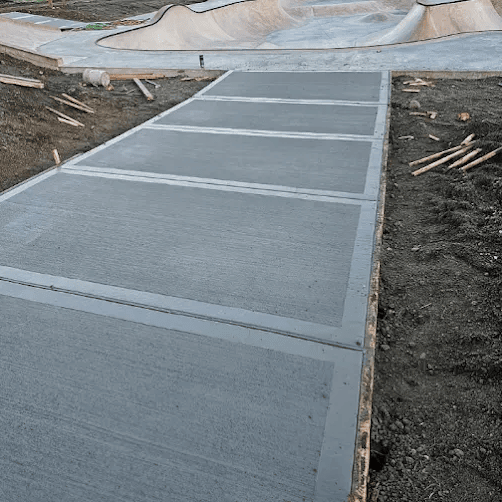
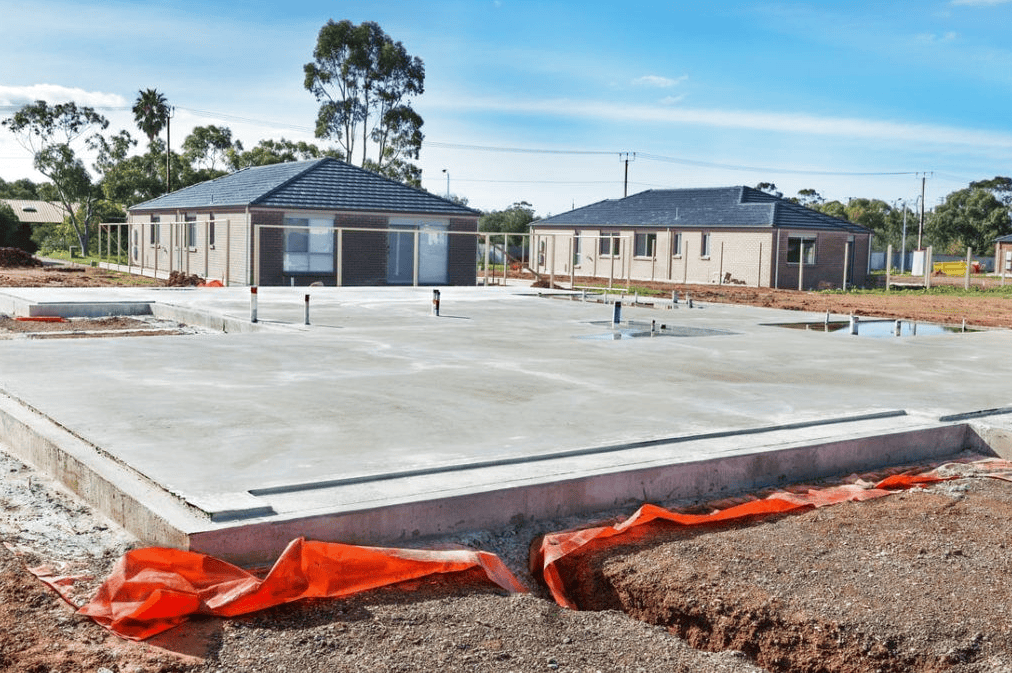
Every concrete job we do in Greenville follows the same core sequence, even if the details change from one project to the next. We start with slab preparation, which means clearing the area, grading the ground, and compacting a solid base beneath your future slab. From there, we set the formwork, place reinforcement like rebar or welded wire mesh, and then bring in the concrete. Once the mix is placed and screeded level, the finishing stage begins. That includes troweling methods to get the surface right, joint placement to control where cracks go, and curing processes to help the slab reach its full strength over time. Done correctly, each step protects the one that follows.
How Pouring Differs by Project Type: Driveway, Patio, Garage Slab, Sidewalk, Commercial Slab
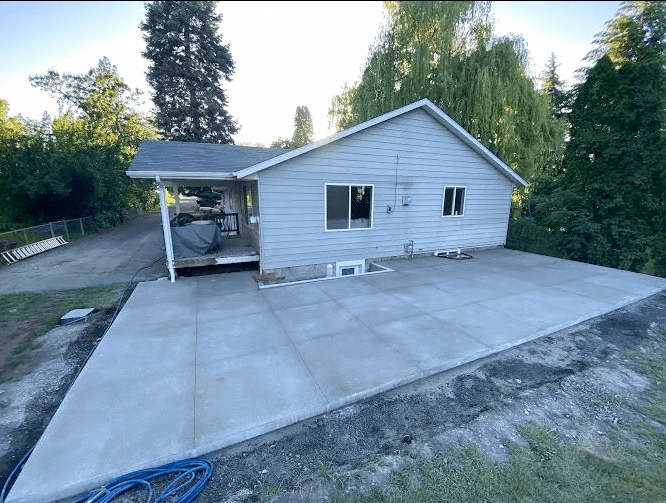
Not every pour is the same. A driveway along Augusta Road needs a thicker slab and stronger mix than a backyard patio in Botany Woods. A garage slab calls for a vapor barrier under the concrete and careful attention to drainage, while a commercial slab near the Greenville Convention Center area may require 5000 PSI concrete and closer rebar spacing to handle heavier loads. Sidewalks need consistent slope for water runoff and ADA compliance. We match the concrete mix, slab thickness, and reinforcement to what your specific project actually needs, not a one-size-fits-all approach.
Why the Finishing Stage Matters as Much as the Pour Itself
A lot of people focus on the pour, but the finishing stage is where the slab either performs well for decades or starts showing problems within a few years. Finishing techniques like broom finishing, power floating, and decorative concrete work all have narrow windows. Greenville's hot, humid summers affect how fast concrete sets, which means timing and crew experience matter. Overworking a surface traps bleed water and weakens the top layer. Underfinishing leaves texture problems. We use tools like a ride-on trowel machine and bull float to hit the right finish at the right time. Proper concrete sealing after the fact adds another layer of protection.
Getting the pour and finish right starts well before the truck arrives. The ground beneath your slab does more than most people realize, which is why site preparation is the first thing we focus on.
Site Preparation Before We Pour
Good concrete starts well before the truck arrives. The work we do beneath the slab determines how it performs over the years. Greenville's expansive clay and red clay subgrade can shift, swell, and compress with moisture changes, so we take site preparation seriously on every job, whether we are working in Verdae, Botany Woods, or along the Augusta Road corridor.
Grading and Excavation
We begin by stripping vegetation and topsoil down to stable native soil. Topsoil compresses unevenly under load, so it cannot stay under a slab. The depth we excavate depends on your project. A standard residential driveway or patio typically calls for removing enough material to accommodate the subbase and a 4-inch slab thickness, while a garage slab or commercial pour may require a 6-inch slab thickness and deeper preparation. We also cut the grade to establish positive slope away from your structure so water moves away rather than toward your foundation.
Subbase Materials and Compaction
Once the grade is set, we bring in a compactable gravel base or crushed stone base and compact it in lifts using a plate compactor. Compaction is not optional. Loose fill under a slab is one of the most common causes of settlement and cracking we see on jobs that were done without proper prep. For areas where moisture migration is a concern, we install a vapor barrier before pouring. This is standard practice under interior slabs and is especially useful in Greenville County where the soil holds moisture well into the summer months.
Form Setting and Layout
Formwork installation defines the shape, elevation, and thickness of your slab. We set forms carefully so the finished surface holds its dimensions and drains the way it should. Straight, well-staked forms also give our crew clean edges to work against during surface leveling and finishing. Before we pour, we double-check elevations, confirm joint placement locations, and make sure everything is square. Time spent on layout here saves rework later and keeps the project on schedule.
Drainage Planning for Greenville's Rain and Clay Soil Conditions
Greenville averages around 50 inches of rain per year, and the Piedmont Plateau soils in this area do not drain the way sandy coastal soils do. Water that sits under or around a slab creates pressure, erosion, and freeze-thaw stress in the colder months. We account for this by grading surfaces to direct runoff, sizing the subbase to allow drainage beneath the slab, and in some situations routing water away through French drains or perimeter channels. If your property sits in a low area near the Reedy River corridor or has a history of standing water, we factor that into the prep plan before a single yard of concrete is ordered.
With the ground properly prepared, forms in place, and drainage addressed, we can turn our attention to selecting the right concrete mix, strength rating, and reinforcement for your specific project.
A few years back, we took on a concrete pouring and finishing job for a homeowner over in the Taylors area, just outside Greenville. It was a large backyard patio, roughly 800 square feet, and the plan was straightforward. Then the weather had other ideas.
We had checked the forecast carefully before scheduling the pour. Greenville summers can be brutal, and hot weather is one of the biggest enemies of fresh concrete. Temperatures above 90 degrees can cause the concrete to set too fast, which leads to cracking and a weak final surface. The forecast looked fine, but on the morning of the pour, the temperature climbed faster than expected and hit 96 degrees by mid-morning.
We had already started placing the concrete when we noticed it was stiffening up much quicker than it should. At that point, you have two choices. You can panic, or you can work the problem. We chose the second option.
Our crew immediately switched into a faster finishing rotation and brought in extra hands to keep up with the accelerated set time. We also used water-soaked burlap to slow the curing process and protect the surface from the direct sun. It meant longer hours and a lot of focused effort, but the finished slab came out smooth, level, and crack-free.
That job reminded us why over 20 years of combined concrete experience matters. When something goes sideways on your project, you want a crew that knows how to adapt and still deliver quality work.
Concrete Mix, Strength, and Reinforcement
Getting the mix right before the first truck arrives matters more than most people realize. We put a lot of thought into concrete mixing specifications, reinforcement choices, and slab thickness before any formwork installation begins. Greenville County clay soils and the red clay subgrade common across the Piedmont Plateau region can shift with moisture changes, so the concrete beneath your driveway or patio has to be built to handle that movement from day one.
Choosing the Right PSI for Your Project
Concrete strength is measured in PSI, which tells you how much compressive force the cured slab can handle. For most residential work, we use 4000 PSI concrete, which meets the demands of driveways, patios, and garage slabs in neighborhoods like Botany Woods or along Augusta Road. Sidewalks and light foot-traffic areas can work with 3000 PSI, but we rarely recommend it given the shrink-swell soil conditions common here. For heavier loads, commercial pads, or anything near a high-traffic corridor like Woodruff Road or Pelham Road, we step up to 5000 PSI concrete. We follow ACI 301 and ACI 302.1R guidelines when specifying mix design, and all ready-mix deliveries are tested to ASTM C39 standards for 28-day compressive strength.
Rebar vs. Fiber Reinforcement
Both rebar and fiber reinforcement add tensile strength to concrete, but they do it differently. Deformed steel bar, typically #4 rebar at 18-inch spacing for residential slabs, resists bending and controls how cracks spread if the ground shifts beneath the slab. Fiber-reinforced concrete uses small synthetic or steel fibers mixed directly into the batch. Fibers help control surface crazing and early shrinkage cracking throughout the entire slab, not just along placed bars. For most residential driveways and patios, we use rebar or 6x6 W1.4xW1.4 welded wire mesh as the primary concrete reinforcement, sometimes combined with fiber for added protection. Heavier commercial work near the Greenville Convention Center area or industrial sites closer to BMW Manufacturing typically calls for #5 rebar at tighter spacing.
Slab Thickness Recommendations by Use
Thickness determines how much load the slab distributes before stress becomes a problem. A standard residential patio or walkway works well at a 4-inch slab thickness over a properly compacted crushed stone base. Driveways that see regular vehicle traffic should be poured at a minimum 4 inches, though we recommend 5 to 6 inches if you park heavier trucks or equipment. A 6-inch slab thickness is standard for garage slabs and any application where point loads are a concern. We always factor in subgrade conditions during slab preparation, and we compact a gravel base to give the slab stable, uniform support beneath it.
Additives and Admixtures That Improve Performance
Greenville's climate adds some specific challenges. Hot, humid summers can cause concrete to set faster than expected, which creates pressure during surface leveling and finishing. We use a retarding admixture in summer pours to extend the workable window and give the crew time to finish properly. A water-reducing admixture helps us maintain a 4-inch slump without adding excess water that would weaken the final product, keeping the water-cement ratio in range with ACI 305R guidance for hot weather work. For slabs that will be sealed or polished, we sometimes incorporate a silica fume or fly ash blend to improve surface density. Air-entraining admixture is used when freeze-thaw exposure is a concern during colder months. These decisions affect not just immediate workability but long-term durability and how well curing processes and sealing will perform on the finished surface.
With the right mix, strength, and reinforcement in place, the next step is choosing how that surface looks and feels when it is done.
Finishing Options We Offer
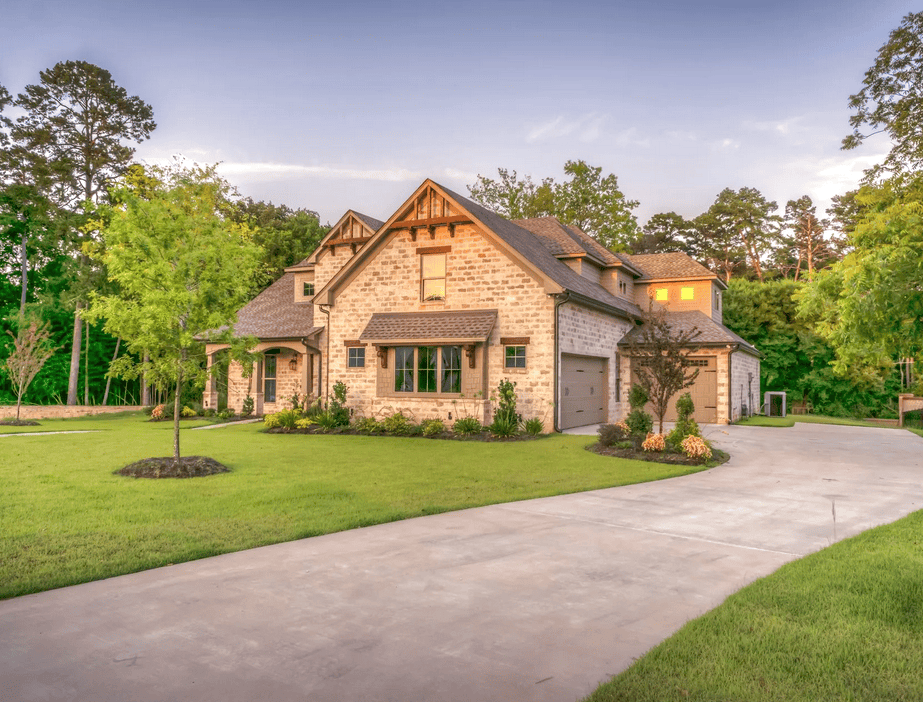
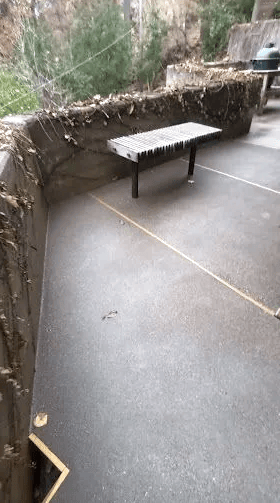
Once the concrete is placed and leveled, the finishing stage shapes how your surface looks, feels, and holds up over time. We use the right tools and finishing techniques for each job, and we time every step carefully because concrete sets quickly in Greenville's heat and humidity. The finish you choose affects both appearance and long-term performance, so we walk you through the options before any work begins.
Broom Finish
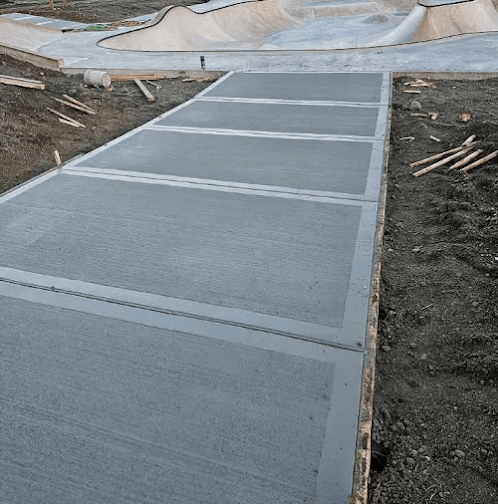
A broom finish is the most common choice for driveways, sidewalks, and exterior slabs. After we strike off and float the surface, we drag a stiff-bristled broom across it to create a textured pattern. That texture gives you traction in wet conditions, which matters during Greenville's rainy spring and summer months. It is straightforward, durable, and works well on everything from a residential driveway off Wade Hampton Boulevard to a commercial walkway near Woodruff Road.
Trowel Finish
A trowel finish produces a smooth, dense surface. We use a ride-on trowel machine or a walk-behind trowel machine depending on the slab size, making multiple passes as the concrete firms up. Troweling methods require careful timing. Too early and the surface tears; too late and the concrete is too stiff to work properly. This finish is common for garage slabs, interior floors, and commercial applications where a clean, flat surface is the priority.
Stamped Concrete
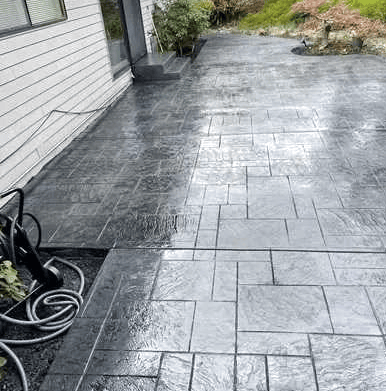
Stamped concrete uses textured mats pressed into freshly placed concrete to mimic the look of brick, slate, stone, or tile. We apply color hardener to the surface before stamping, then use a release agent to bring out contrast and depth. Neighborhoods like Botany Woods and Verdae see a lot of stamped patios and pool surrounds because the look blends well with higher-end landscaping. Keep in mind that stamped surfaces need periodic resealing to stay looking sharp.
Exposed Aggregate
With exposed aggregate, we seed decorative stone or use a gap-graded mix that brings the natural aggregate to the surface. After the concrete reaches the right set, we wash and brush away the surface paste to reveal the stone beneath. The result is a textured, natural-looking surface with good slip resistance. It is a solid choice for patios, pool decks, and front walks where you want something more visually interesting than plain gray concrete.
Colored and Stained Concrete
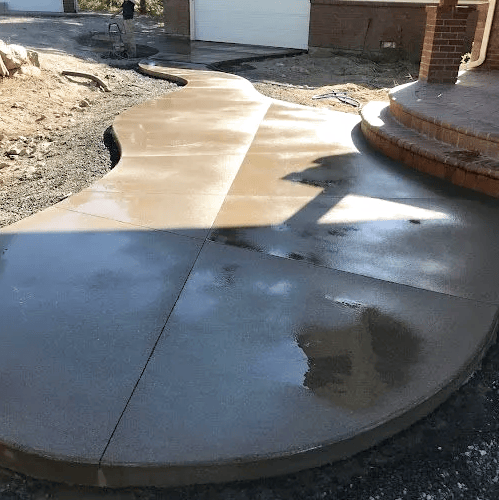
Color can be added as an integral pigment mixed into the batch, a dry-shake color hardener broadcast on the surface, or an acid stain or water-based stain applied after the slab cures. Each approach gives a different result. Integral color goes all the way through the slab. Stains react with or penetrate the surface to create translucent, variegated tones. Decorative concrete like this is popular for covered patios, sunrooms, and commercial lobbies where the floor is part of the design.
Polished Concrete
Polished concrete involves grinding the surface through a series of progressively finer diamond tooling steps, then applying a densifier such as a lithium silicate densifier to harden and seal the surface from within. The result ranges from a matte sheen to a high-gloss mirror finish. This finish is most common on commercial floors and interior residential slabs. It is durable, easy to maintain, and reflects light well, which can reduce the need for artificial lighting in larger spaces.
Slip-Resistant Finishes for Walkways and Steps
For walkways, steps, and any surface where footing matters, we build slip resistance directly into the finish. A medium broom texture is the most common approach, but we also offer broadcast silica sand finishes and exposed aggregate options depending on your preference and the look you are going for. Proper slope and drainage are just as important as surface texture, and we set our forms and grade accordingly so water moves away from the surface rather than sitting on it.
After the finish is complete, the work is not done. What happens in the hours and days following the pour plays a big role in how strong and stable your slab becomes over time, which brings us to curing, sealing, and jointing.
Curing, Sealing, and Jointing
How Long Concrete Needs to Cure and Why It Matters
Once the pour is done and the finishing is complete, the work is not over. Curing is what allows concrete to reach its full strength, and skipping or rushing it is one of the most common reasons slabs crack or wear out early. Concrete does not dry — it cures through a chemical reaction called hydration, and that reaction needs moisture and time. We follow ACI 308R curing guidelines on every job, which typically means keeping the surface moist for at least seven days. For a standard residential driveway or patio using 4000 PSI concrete, the slab reaches most of its design strength around the 28-day mark. Depending on conditions, we use curing compound, polyethylene sheeting, or wet burlap to slow moisture loss and give the concrete the best chance of hitting that 28-day compressive strength without surface crazing or shrinkage cracking.
Sealing Options and How They Protect Your Surface
Concrete sealing is not required, but it makes a real difference in how long a surface holds up. We offer several options depending on your project and budget. An acrylic concrete sealer works well for most driveways and patios — it sits on the surface and sheds water and staining. For a harder, more permanent result, a penetrating epoxy sealer or sodium silicate densifier soaks into the concrete and strengthens the surface from within. For decorative concrete work like stamped or colored slabs, sealing also protects the finish and keeps colors looking consistent over time. We can walk you through what makes sense for your specific slab before we finalize your quote.
Control Joints and Expansion Joints Explained
Concrete will crack. That is not a flaw — it is a physical property of the material. What professionals do is control where those cracks happen so they do not cause damage or look bad. We use control joints, either saw-cut or tooled in during finishing, to create intentional weak points that guide cracking below the surface. Joint placement follows spacing guidelines based on slab thickness — a 4-inch slab generally needs joints no more than 10 feet apart in each direction. Expansion joints are a separate thing. They go between the slab and fixed structures like your foundation or a garage wall, and they use a compressible expansion joint filler to allow independent movement. Both are required under the Greenville County Building Code, and we handle the layout on every job.
How Greenville's Heat, Humidity, and Occasional Freezes Affect Curing
Working in Greenville means accounting for the local climate at every stage. Greenville County sits on the Piedmont Plateau, and the combination of summer heat, high humidity, and occasional winter freezes creates real challenges for concrete. In hot weather, the surface can dry faster than the interior cures, which leads to surface cracking and weak spots. We follow ACI 305R hot-weather concrete guidelines during summer pours, which may include using a retarding admixture to slow the set or scheduling pours for early morning. In cooler months, we watch overnight temperatures closely. If a freeze hits within the first few days after a pour, it can damage a slab permanently before it has had time to develop strength. We plan pour windows around the forecast and use curing blankets when temperatures are expected to drop. These are the kinds of decisions that come from over 20 years of combined experience and more than a decade working specifically in the Greenville area.
Knowing how to handle materials, timing, and local conditions correctly is part of what separates a long-lasting slab from one that needs repairs in a few years. That same level of care carries into how we handle licensing, insurance, and code compliance on every project we take on.
Who We Are and Why Greenville Trusts Our Concrete Work
We are a concrete contractor based in Greenville, SC, and we have been pouring and finishing concrete in this area for over 10 years. Our crew brings more than 20 years of combined hands-on experience to every job, from small residential repairs to large commercial pours.
Working in Greenville means we know this area well. We understand the local soil conditions, the humidity that comes with South Carolina summers, and how the seasonal temperature swings here can stress a concrete surface if the mix and curing process are not handled correctly. That kind of local knowledge matters on every job we take on, whether we are installing a driveway in Simpsonville, a pool deck in Taylors, or a commercial slab in downtown Greenville.
We handle the full range of concrete work. That includes driveways, patios, garage floors, pool decks, sidewalks, foundations, retaining walls, stamped and decorative concrete, concrete cutting and removal, resurfacing, sealing, and staining. We also work on commercial and industrial projects, including parking lots, warehouse floors, and ADA-compliant ramps and sidewalks.
When you hire us, you get a crew that shows up prepared. We handle permits, site prep, forming, pouring, finishing, and cleanup. We carry insurance and stand behind our work with a written warranty. You will know exactly what is included before we start, and we keep you informed throughout the project.
If you have a concrete project coming up and want to know what it will take to get it done right, we are glad to come out, take a look, and give you a free estimate.
Licensing, Insurance, and Local Code Requirements
When you hire a concrete contractor in Greenville, SC, you deserve to know exactly who is showing up to your property and what credentials they carry. We hold a South Carolina Contractor License and have worked within Greenville County for over a decade, so we understand what local inspectors look for and what the job requires from start to finish.
What Licensing We Carry to Work in Greenville, SC
We hold a current SC Contractor License along with an Upstate SC Builder License, which allows us to legally perform concrete work across Greenville County and the surrounding area. Several members of our crew also hold ACI Flatwork Technician and ACI Concrete Finisher certifications, which means our finishing techniques and slab preparation practices meet nationally recognized standards. These are not just pieces of paper. They reflect over 20 years of combined hands-on experience and ongoing training in areas like curing processes, joint placement, and proper concrete mixing.
Permits Required for Concrete Work in Greenville
Not every concrete pour requires a permit, but many do. In Greenville County, structural slabs, driveways with curb cuts, retaining walls, and most commercial flatwork typically require permits pulled through the Greenville County Building Safety Department or the City of Greenville Building Codes Division, depending on where your property is located. We handle the permitting process on your behalf, including any required inspections. If your project is near a road or public right-of-way along something like Wade Hampton Boulevard or Augusta Street, there may also be a review needed through the City of Greenville Public Works Department or the South Carolina Department of Transportation Greenville District. We know this process and factor it into your project timeline from the beginning.
ADA Compliance and Local Building Code Standards
For any concrete work that involves public access, such as sidewalks, ramps, or commercial entries, we follow ADA requirements and adhere to the SC Building Code and Greenville County Building Code. This includes correct slope tolerances, proper joint placement, and surface texture requirements for slip resistance. Our work on decorative concrete surfaces still meets these functional standards, so a stamped or finished surface does not come at the cost of safety or compliance. We also follow ACI 302.1R and ACI 318 guidelines for slab design and reinforcement, which means the structural side of your project is built to hold up under real-world conditions.
Why Hiring an Insured Contractor Protects You
We carry general liability insurance and workers compensation coverage on every job. If something goes wrong on your property during concrete pumping, formwork installation, or surface leveling, you are not left holding the bill. An uninsured crew may quote you a lower number, but if there is a property damage claim or a worker gets hurt, that cost can fall on your homeowner's policy or on you directly. We provide proof of insurance before any work begins, and we are happy to list you as an additional insured on request. That kind of transparency is part of how we do business.
Once you are comfortable with our credentials and coverage, the next thing most people want to know is when we can get started and what the schedule looks like, which brings us to timeline, scheduling, and the weather conditions we factor into every pour here in Greenville.
Timeline, Scheduling, and Weather Considerations
How Long a Typical Pour and Finishing Job Takes
Most residential concrete jobs in Greenville take one to three days from start to finish, depending on the size and complexity of the work. A standard driveway or patio will typically have one day of slab preparation and formwork installation, followed by the pour and finishing on the next day. Curing processes then take over, and we generally ask that you keep the surface free of traffic for at least 24 to 48 hours after the pour, with full strength reached closer to the 28-day compressive strength mark. Larger or more detailed work, such as stamped or colored concrete, adds time to the finishing phase because those troweling methods require careful timing as the slab sets.
Best Times of Year to Pour Concrete in Greenville
Spring and fall are the most forgiving seasons for concrete work in Greenville. Temperatures tend to stay in a range that supports proper hydration and strength development without putting stress on the mix. Greenville sits on the Piedmont Plateau, and its clay-heavy soils can shift with seasonal moisture changes, so pouring during stable weather also helps with subgrade conditions. Summer pours are very common here and work well when planned correctly, though the heat and humidity require closer attention to mix design and curing. Winter pours are possible but need extra planning around overnight lows.
How We Plan Around Rain, Heat, and Cold Snaps
Weather effects on concrete are something we take seriously on every job. In Greenville's hot, humid summers, high temperatures can accelerate setting time and lead to surface crazing if finishing is rushed or curing is delayed. We use a retarding admixture or adjust our water-cement ratio to compensate. When temperatures push past 90 degrees, we coordinate with our ready-mix supplier to adjust delivery timing and may schedule the pour for early morning. In cold weather, we monitor overnight lows closely. If temps are expected to fall below 40 degrees, we use polyethylene sheeting or curing blankets to protect the slab. Rain is the one condition that can stop a pour entirely, since water on freshly finished concrete damages the surface permanently. We watch forecasts closely and communicate with you as soon as we see a potential conflict, so there are no surprises.
What to Expect on Pour Day
On pour day, our crew arrives early to confirm forms are secure, reinforcement is in place, and the subbase is ready. The concrete transit mixer arrives at a scheduled time, and from that point the work moves quickly. We use a power screed and bull float to bring the surface to grade, then follow up with surface leveling passes and finishing as the slab reaches the right consistency. Depending on the finish you chose, such as a broom finish or exposed aggregate, the timing of each step changes. Joint placement is handled before the concrete fully sets, either with a groover or a concrete saw after curing begins. Once finishing is complete, we apply a curing compound or wet cure method based on conditions that day. Before we leave, the site is cleaned up and we walk you through what to expect over the next several days.
Understanding how scheduling and weather shape the outcome of a concrete job connects directly to what you pay and what you get for your money. Next, we will walk through the costs involved and the factors that most affect your total price.
Cost, Value, and What Affects Your Price
Concrete work is one of the more significant investments you can make in your property, and it helps to understand what goes into the price before you call us for a quote. We want to walk you through the main cost factors, how concrete compares to other materials, and what you get for your money over time.
What Factors Influence the Cost of Concrete Pouring and Finishing in Greenville
Several things shape the final cost of a concrete project here in Greenville. Slab size is the most obvious one, but thickness matters just as much. A standard 4-inch slab thickness works well for most patios and walkways, while driveways and garage slabs often need a 6-inch slab thickness with #4 rebar or fiber-reinforced concrete to handle heavier loads. The mix design also affects price. A 4000 PSI concrete mix costs more than a basic 3000 PSI mix, but it holds up better under traffic and load.
Site conditions in Greenville add another layer to pricing. The Greenville County clay soils and red clay subgrade common across neighborhoods like Botany Woods, Pebble Creek, and areas along Wade Hampton Boulevard can require more excavation, additional compaction with a plate compactor, and a deeper compactable gravel base before we ever pour. Poor drainage or an unlevel yard adds time and labor. If your site is tight or has limited truck access, we may need a concrete pump truck, which is an added cost worth factoring in.
Finishing choices also move the price. A basic broom finish costs less than decorative concrete options like stamping, exposed aggregate, or a polished surface. Those finishing techniques require more time, specialized equipment like a ride-on trowel machine, and in some cases, materials like a sodium silicate densifier or colored hardener. Permits pulled through the City of Greenville Building Codes Division or Greenville County Building Safety Department add a modest fee but are required for most structural work.
Cost Comparison: Concrete vs. Pavers, Asphalt, and Gravel
Pavers typically cost more upfront than poured concrete, and over time they can shift, settle, and allow weed growth between joints. Asphalt is often cheaper to install but needs resealing every few years and can soften during Greenville's hot summers. Gravel is the least expensive option but offers no structural support, no clean finished surface, and needs regular replenishment. Concrete sits in the middle on upfront cost but tends to outlast all three options with far less ongoing maintenance. A well-poured slab with proper joint placement and a good concrete sealer applied after curing can serve you for 30 or more years with very little attention.
Long-Term Value and Reduced Maintenance Costs
When you factor in the full lifecycle, concrete is hard to beat. Proper slab preparation, correct reinforcement, and reliable curing processes mean you are not paying for repairs or resurfacing five years down the road. We follow ACI 308R curing guidelines and use quality curing compounds to make sure your slab reaches its full 28-day compressive strength. A concrete sealer applied after the curing period adds protection against moisture, staining, and surface wear. That upfront care significantly reduces what you spend on maintenance over the years. It also adds to your property value, which matters whether you are in Chanticleer, Verdae, or anywhere else across the Greenville area.
How to Get an Accurate Quote From Us
The most reliable way to get a real number is to have us come look at your site. Photos and rough dimensions give us a starting point, but a walkthrough lets us assess the subgrade, access, drainage, and any site-specific conditions that could affect the job. From there, we put together a detailed written quote that covers materials, reinforcement, formwork installation, finishing, and any permit fees. We do not pad numbers or leave things vague. You will know exactly what you are paying for before we start.
Once you have a clear picture of what the work costs and why it is priced the way it is, the next natural question is whether we have done this kind of work before near you. That brings us to our experience and past work right here in Greenville.
Our Experience and Past Work in Greenville
Over 20 Years of Combined Concrete Experience
Between our crew members, we bring more than 20 years of hands-on experience with concrete pouring and finishing. That includes everything from slab preparation and formwork installation to surface leveling, troweling methods, and curing processes. We have worked with a wide range of mix designs, including 4000 PSI and 5000 PSI concrete, and we understand how choices like water-cement ratio, fiber-reinforced concrete, and rebar placement affect how a slab performs over time. That depth of experience means fewer surprises on your job site.
More Than 10 Years Working Specifically in Greenville, SC
We have been pouring concrete in Greenville County for over a decade. That matters because local conditions shape every pour. The red clay subgrade and shrink-swell soils common throughout the Piedmont Plateau region require careful subbase work before a single yard of concrete is placed. We know how to read a site, whether we are working near the Reedy River, in a subdivision like Botany Woods or Verdae, or along a commercial corridor off Woodruff Road or Pelham Road. Our work meets the Greenville County Building Code, and we handle the permitting process through the City of Greenville Building Codes Division or Greenville County Building Safety Department as needed.
Types of Projects We Have Completed Locally
Our local project list covers residential and commercial work across Greenville. We have poured driveways, patios, garage slabs, sidewalks, and larger commercial flatwork throughout neighborhoods like Augusta Road, North Main, and Hollingsworth Park. On the decorative side, we have completed stamped and colored concrete projects where finishing techniques and timing made all the difference. We use equipment like a power screed, ride-on trowel machine, and concrete vibrator to ensure consistent results, and we are familiar with concrete pumping when site access is limited. Every project we take on is held to ACI 302.1R guidelines for slab construction.
Reviews and References from Greenville Customers
We are happy to connect you with past customers right here in Greenville who can speak to the quality of our work and how we handled their project from start to finish. You can also ask us for photos of completed jobs. Seeing real work we have done in your area gives you a clearer picture of what to expect than any description we could write. Once you have looked through our past work and spoken with references, the next thing most customers want to know about is how we handle things after the pour, including our warranty, any repair policy, and how we leave your property when the job is done.
Warranty, Repairs, and Post-Pour Cleanup
What Our Workmanship Warranty Covers
When we finish a pour, our responsibility does not end there. We stand behind our work with a workmanship warranty that covers defects tied directly to how the concrete was placed, finished, and cured. That includes problems like surface delamination, premature cracking from poor joint placement, or scaling caused by errors in our curing processes. It does not cover damage from tree roots, vehicle loads beyond what the slab was designed for, or acts of nature. Before any project starts, we walk you through exactly what is and is not included so there are no surprises later. We work to meet the standards outlined under the Greenville County Building Code and follow ACI 301 guidelines, which gives you a clear benchmark for what quality workmanship looks like on your project.
How We Handle Repairs If Issues Come Up After the Pour
If you notice something after the pour that concerns you, the right move is to contact us directly and quickly. We will come out, take a look, and give you an honest assessment. Not every crack is a structural problem. Hairline surface cracks, for example, can sometimes be addressed with a sodium silicate densifier or a penetrating epoxy sealer depending on the cause and depth. If the issue does fall under our workmanship warranty, we take care of it at no cost to you. We use the same quality materials on repairs that we use on original pours, including fiber-reinforced concrete or appropriate patching compounds, so the fix is not just cosmetic. Our crews have over 20 years of combined experience, and we have been working specifically in Greenville for more than 10 years, so we know how weather effects on concrete play out here over time, especially with the clay-heavy soils found across much of Greenville County.
What Cleanup Looks Like After the Job Is Done
Once the concrete has set and finishing is complete, we clear the site of all leftover formwork, excess material, and equipment. That means tools like the bull float, power screed, and walk-behind trowel machine all get loaded out. We remove concrete slurry, overspray from any curing compound, and plastic sheeting used during the curing period. We also clean up the surrounding area, including any concrete tracked onto driveways, sidewalks, or landscaping near the work zone. Before we leave, we walk the site with you to confirm everything looks right and answer any questions you have about what comes next, including when the slab will be ready for foot traffic, vehicles, or sealing. A clean handoff matters to us, and we treat your property the same way we would want ours treated.
With warranty coverage, a clear repair process, and a clean site waiting for you at the end, the only thing left is putting your new concrete surface to work. In the final section, we will bring everything together so you know exactly what to expect when you work with us.
Ready to Get Started on Your Concrete Project in Greenville, SC
What Professional Concrete Pouring and Finishing Means for Your Property
A solid warranty and a clean jobsite are just the beginning of what you get when you work with a crew that takes concrete seriously. From the first shovel of dirt to the final coat of sealer, every step we take is aimed at giving you a surface that holds up for decades. That kind of result does not happen by accident. It comes from the right materials, the right equipment, and the experience to use both correctly.
When you hire us for your concrete project, here is what you can expect:
- Proper slab preparation built on an understanding of Greenville County clay soils and how they shift with moisture
- Accurate concrete mix design, including options like 4000 PSI concrete or fiber-reinforced concrete matched to your specific load needs
- Correct reinforcement placement using rebar or welded wire mesh to control cracking and add long-term strength
- Careful formwork installation and grading to ensure positive drainage away from your home or structure
- Smart joint placement to direct any future cracking where it does the least harm
- Proven finishing techniques, from broom and trowel finishes to decorative concrete options like stamped and exposed aggregate surfaces
- Reliable curing processes using curing compounds or polyethylene sheeting to reach full 28-day compressive strength
- Weather-aware scheduling that accounts for Greenville's hot, humid summers and the occasional winter freeze
- Concrete sealing with quality products to protect your surface from staining, moisture, and surface wear
- Full compliance with the Greenville County Building Code and permits handled through the City of Greenville Building Codes Division when required
- Over 20 years of combined experience pouring concrete, with more than 10 years working right here in the Greenville area
- A clear warranty, honest billing, and a jobsite left clean when we walk off
How to Reach Us and Schedule Your Project in Greenville, SC
Whether you are planning a new driveway in Botany Woods, a patio off Augusta Road, a garage slab near Woodruff Road, or a commercial pour closer to Interstate 85, we are ready to talk through your project and give you straight answers. We work across Greenville and the surrounding Upstate SC area, and we know this ground, this climate, and what it takes to do the job right the first time.
Call us today or fill out the quote form below to get your free estimate. We will review your project, walk you through your options, and get you on the schedule.
Greenville SC Concrete
220 N Main St
Greenville, SC 29601
Business Hours
| Mon | 7:00 AM – 10:00 PM |
| Tue | 7:00 AM – 10:00 PM |
| Wed | 7:00 AM – 10:00 PM |
| Thu | 7:00 AM – 10:00 PM |
| Fri | 7:00 AM – 10:00 PM |
| Sat | 7:00 AM – 10:00 PM |
| Sun | 7:00 AM – 10:00 PM |