Concrete Walkways & Sidewalks in Greenville
Sidewalk & Walkway Concrete Services in Greenville
Service Area and Availability in Greenville, SC
We provide concrete sidewalk and walkway installation services throughout Greenville, SC and the surrounding Upstate area. Our crew works in neighborhoods across the city and county, including Augusta Road, North Main, West End, Mauldin, Simpsonville, Greer, Taylors, and Travelers Rest, along with subdivisions like Hartness, Verdae, Hollingsworth Park, and Botany Woods. We serve both residential and commercial customers and can typically schedule a free on-site estimate within a few business days. If you have a project that needs to move quickly, reach out and we will do our best to work around your schedule.
Common Problems with Existing Walkways and Sidewalks
A lot of homeowners and business owners come to us after putting up with the same problems for years. Cracked slabs, sunken sections, uneven joints, and sidewalk repair needs that keep coming back are some of the most common things we hear about. Water pools in low spots after a rain, edges crumble, and what started as a small crack has grown into a trip hazard. In some cases, the original walkway installation was done without proper subgrade preparation or reinforcement, which means the surface fails faster than it should. Whether you need a full replacement or concrete resurfacing to bring an aging surface back into shape, we can look at what you have and give you an honest assessment of the best path forward.
Local Knowledge: Greenville Neighborhoods, Soil Conditions, and Climate
We have been pouring concrete in Greenville for over 10 years, and that time on the ground here has taught us a lot about what this area throws at a sidewalk. Greenville sits on the Piedmont plateau, and much of the soil throughout the county is red clay or expansive clay with a high plasticity index. That kind of soil shifts with moisture, which puts real stress on concrete slabs that were not poured over a properly compacted base. We see this regularly in older neighborhoods along Wade Hampton Boulevard, around Pleasantburg Drive, and in established subdivisions near Woodruff Road. Greenville also gets heavy seasonal rain, and areas near the Reedy River or Brushy Creek can have drainage challenges that affect how a walkway holds up over time. Our crews account for all of this before the first form stake goes in. We design proper drainage slopes, typically a 2% drainage slope away from structures, prepare the subgrade correctly, and use concrete mixes suited for our climate. If you want to improve your yard with concrete that actually lasts, getting the groundwork right from the start is what makes the difference. We work with the Greenville County Building Codes Division and pull permits through the City of Greenville Development Services Center when required, so your project stays fully above board.
Frequently Asked Questions from Greenville Homeowners
Do you handle permits? Yes. Depending on the scope of your project, permits may be required through the City of Greenville Development Services Center or the Greenville County Building Codes Division. We take care of that process for you.
How long does a concrete walkway last? A properly installed concrete pathway, poured to at least 4000 psi compressive strength with the right reinforcement and subgrade preparation, can last 30 years or more with basic concrete maintenance and periodic sealing.
What finish options are available? We offer broom finishes for slip-resistant surfaces, stamped concrete patterns, integral color, and exposed aggregate, among others. Decorative sidewalks can be matched to existing driveways or outdoor paving for a consistent look.
Can you match my existing walkway? In most cases, yes. We carry experience with a wide range of finishes and can get very close in texture and tone to what you already have on your property.
Do you work on commercial projects? We do. We handle curb ramps, connectivity paths, and durable walkways for commercial sites in compliance with ADA Standards for Accessible Design and local code requirements.
Those are the basics, but every property is a little different. The next step is understanding why concrete is often the most practical and cost-effective material for this kind of work, which is exactly what we cover next.
Why Concrete Is a Smart Choice for Walkways and Sidewalks
When you are deciding on a material for your walkways or sidewalks, concrete stands out as one of the most practical options available. We have spent over 20 years working with concrete and more than 10 years serving homeowners and businesses across Greenville, from Augusta Road and North Main to Simpsonville and Taylors. That experience gives us a clear picture of what holds up here and what does not.
Durability Compared to Pavers, Gravel, and Wood
Gravel shifts and scatters. Wood rots, warps, and needs constant attention. Pavers can look great early on, but they settle unevenly over time, especially in Greenville's red clay and expansive soil conditions. Concrete, when installed correctly with the right mix and reinforcement, is simply built to last. A properly poured slab using 4000 psi compressive strength concrete and #4 rebar at 18 inches on center can hold up for decades without the ongoing costs that other materials bring. Our durable walkways are built to handle the demands of Greenville's climate, foot traffic, and soil movement.
Low Maintenance Over the Long Term
Once your concrete walkway is in place, there is very little you need to do to keep it looking and performing well. Occasional cleaning, a periodic application of a penetrating silane sealer, and keeping trees with aggressive roots at a safe distance are about all that is required. Compared to pavers that need re-leveling or wood that needs staining and sealing every year or two, concrete maintenance is straightforward and inexpensive. That lower long-term cost is one reason so many property owners in areas like Verdae, Hollingsworth Park, and Chanticleer choose concrete for their outdoor paving projects.
Safety Benefits Including Even Surfaces and Slip-Resistant Finishes
An uneven walkway is a real hazard. Settled pavers, raised roots pushing through a cracked surface, or a slick finish after rain can lead to falls and injuries. Concrete gives you a stable, even surface that we can finish in several ways to improve traction. A broom finish is one of the most common choices for slip-resistant surfaces, and it works well on both residential sidewalks and commercial pathways where foot traffic is heavy. We follow ADA Standards for Accessible Design on every project where accessibility is a concern, which helps protect you from liability and keeps your property safe for everyone who uses it.
Property Value and Curb Appeal
A clean, well-installed walkway makes a noticeable difference in how your property looks and what it is worth. Whether you go with a standard broom finish or choose stamped concrete with an integral color pigment to complement your landscaping, concrete gives you real flexibility. Options like decorative sidewalks with perimeter edging and exposed aggregate finishes are popular in neighborhoods like Botany Woods and Hunting Country where curb appeal matters. The finished look ties your driveway, walkway, and landscaping design together in a way that other materials rarely match.
With the right material choice settled, the next step is understanding exactly what goes into a proper walkway installation from the ground up.
New Concrete Walkway and Sidewalk Installation
Whether you are adding a front walkway in a North Main neighborhood home or connecting a parking area to a commercial entrance off Woodruff Road, we approach every new walkway installation with the same level of care. With over 20 years of combined experience pouring concrete and more than a decade working throughout Greenville, we understand what it takes to build durable walkways that hold up in this climate and on this soil.
Planning Your Layout and Dimensions
Before any digging starts, we work with you to map out the path, width, and connections that fit your property. A standard residential walkway runs about 4 feet wide, while ADA-compliant paths and commercial concrete pathways often require more. We review your property grade, how the walk connects to driveways or street curbs, and whether any permits are needed through the City of Greenville Development Services Center or Greenville County Building Codes Division. We also look at how the layout affects your landscaping design and existing outdoor paving so the finished project ties everything together.
Subgrade Preparation and Compaction
Greenville sits on the Piedmont plateau, and the red clay and expansive clay soils common across the area are not naturally stable ground for concrete. We excavate to the right depth, remove poor material, and bring in a compacted gravel base, typically #57 stone, to build a solid foundation. A plate compactor is used to reach the bearing capacity the slab needs. Skipping this step is one of the most common reasons sidewalks crack and settle years later. We also factor in drainage solutions at this stage, making sure the subgrade slopes correctly so water moves away from your home and does not pond beneath the slab.
Concrete Thickness and Reinforcement Options
For most residential walkways, a 4-inch slab thickness works well. Heavier-use areas or softer soil conditions call for 6-inch thickness. We typically use a concrete mix built around Portland cement Type I/II with a target of 4000 psi compressive strength and a water-cement ratio around 0.45 for durability. Reinforcement options include fiber mesh reinforcement throughout the mix, welded wire mesh, or #4 rebar at 18 inches on center depending on the load and site conditions. Control joints and expansion joint filler are placed to guide where the concrete can move, reducing the chance of uncontrolled cracking.
Forming, Pouring, and Finishing the Slab
We set forms using paving form stakes and a string line level to hold the correct grade and edge alignment. Concrete is delivered by a concrete transit mixer from suppliers like Carolina Ready Mix or Greenville Ready Mix, and we use a bull float and edge groover to bring the surface to a consistent finish. Depending on what you want, we can apply a broom finish for a practical slip-resistant surface, or move into stamped concrete and integral color pigment for a more decorative look. For properties in areas like Botany Woods or Verdae where curb appeal matters, decorative sidewalks with perimeter edging can really change how the front of a property looks. We keep a 2% drainage slope across the surface to move water off cleanly.
Curing Time and When the Surface Is Ready to Use
Once the pour is finished, we apply a concrete curing compound to slow moisture loss and protect the surface as it gains strength. Light foot traffic is generally possible within 24 to 48 hours, but we recommend allowing a full 30-day cure time before placing heavy loads on the slab. Rushing this step causes surface scaling and long-term weakness. Proper curing is just as important as the pour itself, and it is one area where professional work makes a measurable difference in how long your walkway lasts.
Even with a well-built new walkway, existing sidewalks on your property may tell a different story. If you are dealing with cracked panels, uneven sections, or surfaces that have shifted over time, the next section covers what we can do to repair or replace damaged sidewalks.
A few years back, we got a call from a homeowner over in the Taylors area just outside Greenville. They wanted a new concrete walkway running from their driveway all the way around to their back patio. Simple enough on paper, but when we showed up to take a look, we knew right away this one was going to test us.
The yard had a pretty steep slope, and the soil underneath was full of red clay. If you've spent any time in the Upstate, you know our clay soil is no joke. It shifts, it holds water, and it does not play nice with concrete if you don't prepare for it properly. On top of that, we were heading into late October, and the overnight temperatures were starting to drop. Cold weather and fresh concrete are not a good mix.
We had to regrade part of the yard, bring in a compacted gravel base to replace the soft clay, and carefully plan out the joints so the walkway could handle any ground movement over time. Then we had to time our pour around the weather forecast, making sure we had enough warm hours in the day for the concrete to cure before the cold crept in at night.
We also had to build in a small retaining edge on one side to keep water from the slope from undercutting the slab over time. It took more planning than your average walkway job, but we got it done right.
When we finished, the homeowner told us it was the best money they had spent on their property in years. That kind of feedback is why we put in the extra work, even when a job throws curveballs. With over 20 years of combined experience pouring concrete and more than 10 years working right here in Greenville, we have seen enough tricky situations to know how to handle whatever comes up on your property.
Repair and Replacement of Damaged Sidewalks
Over time, even well-built sidewalks break down. Greenville's red clay soils shift with moisture changes, tree roots push up from below, and freeze-thaw cycles stress the surface through winter. Whether you have a single cracked panel on Augusta Road or a sunken walkway in Botany Woods, we can assess what you have and tell you honestly what it needs.
Signs Your Walkway Needs Repair or Full Replacement
Not every flaw means you need to start over. But some problems do go beyond a simple fix. Watch for panels that have sunk or tilted more than an inch, wide cracks that run through the full depth of the slab, surfaces that have scaled or spalled down to the aggregate, and sections where water pools instead of draining away. Any of these can create a trip hazard and, for businesses, a liability concern. If your walkway connects to a public right-of-way, the City of Greenville Public Works Department or Greenville County Public Works may have standards that apply to how and when repairs happen.
Fixing Cracks, Sunken Sections, and Heaving
Sunken panels are often caused by weak or poorly compacted subgrade, which is common where expansive clay soils are present across the Piedmont plateau. We address that by removing the damaged section, re-grading and compacting the base, and replacing it with fresh concrete poured to the correct elevation. For heaving caused by tree roots, we work with you on root management before we pour so the problem does not come back. Cracks that are isolated and tight may be filled using a polyurethane joint sealant or repaired with an epoxy bonding agent depending on the depth and cause.
When Patching Is Enough Versus When to Replace
Shallow surface wear, minor scaling, or hairline cracks on an otherwise sound slab may be good candidates for concrete resurfacing. A thin bonded overlay, properly prepared with the right bonding agent, can restore the surface without a full tear-out. However, if the slab has structural cracks, poor bearing capacity underneath, or has settled unevenly, patching on top will not hold. We take the time to probe and evaluate before recommending anything, because a patch on a failing base is money spent twice.
Matching New Concrete to Existing Surfaces
One of the more practical challenges in sidewalk repair is making new work blend with what is already there. Concrete changes color as it ages, so a brand-new panel next to a ten-year-old walkway will look different at first. We use integral color pigment and finishing techniques to get the new work as close as possible to the surrounding surface. We also match the texture, whether that is a standard broom finish or something more decorative, so the repair does not stand out. For properties in neighborhoods like Chanticleer or Verdae where curb appeal matters, that consistency makes a real difference.
Once the structural and repair work is solid, many homeowners and property owners start thinking about what the finished surface should look and feel like. That leads naturally into the choices available for finishes and design.
Finish and Design Options
Once the subgrade is prepared and the concrete is placed, the finish you choose shapes how your walkway looks and performs for years to come. We work with homeowners and businesses across Greenville to match the right finish to the right setting, whether that is a simple path beside a driveway in Berea or decorative sidewalks wrapping around a commercial property near Augusta Street.
Broom Finish for Everyday Walkways
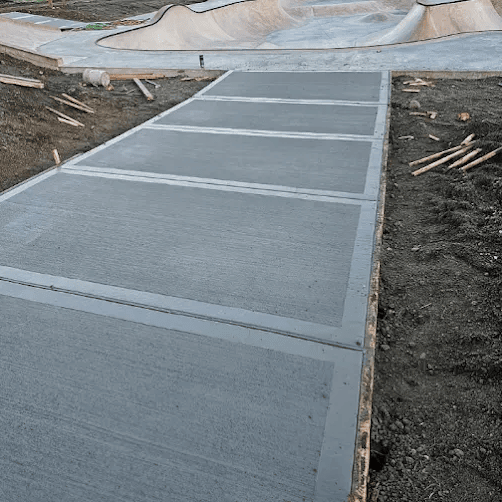
A broom finish is the most common choice for residential and municipal walkway installation because it is practical and holds up well. We drag a stiff brush across the surface while the concrete is still workable, leaving shallow grooves that give you slip-resistant surfaces even when rain or morning dew rolls in off the Reedy River corridor. It is a clean, understated look that fits most homes and requires very little ongoing concrete maintenance.
Stamped Concrete Patterns and Textures
For homeowners in neighborhoods like Chanticleer or Verdae who want something closer to natural stone or brick without the higher cost and upkeep, stamped concrete is a solid option. We press texture mats into the surface before it cures, creating patterns that can mimic flagstone, slate, cobblestone, and more. We use integral color pigment along with release agents to add depth and contrast. Stamped concrete pairs well with landscaping design and ties concrete pathways into the overall look of your outdoor space.
Colored and Stained Concrete
Color can be added directly to the mix before pouring or applied as a stain after the slab cures. Integral color runs all the way through the slab, so minor surface wear does not expose a gray base underneath. Acid-based stains react chemically with the concrete to produce earthy, variegated tones that look natural. Both approaches let you coordinate your outdoor paving with your home's exterior, hardscape, or existing walkways without needing to resurface later.
Exposed Aggregate Finishes
An exposed aggregate finish involves washing away the top layer of cement paste before it fully hardens, which brings the stone within the mix to the surface. We can use crushed granite or other decorative aggregates to create a textured surface with natural visual interest. This finish is popular on durable walkways around pools and in areas where extra traction matters. It also holds up well in Greenville's climate without significant concrete resurfacing down the road.
Decorative Borders and Inlays
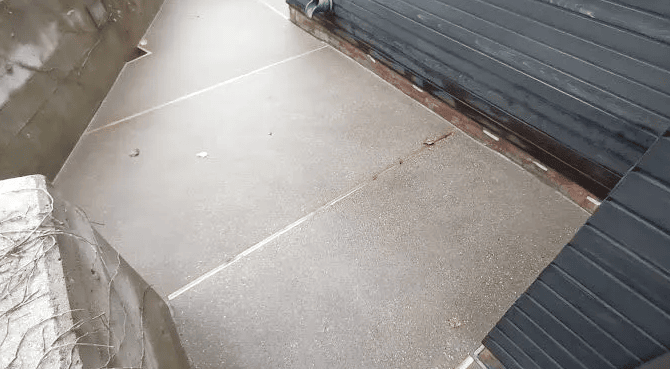
Borders and inlays let you define the edge of a walkway or break a large surface into smaller visual sections. We use saw cuts, contrasting colors, or different aggregate blends to create perimeter edging that gives the finished surface a clean, intentional look. This approach works well on longer concrete pathways where a single flat finish would feel plain, and it adds to curb appeal without a significant change to the overall project cost.
Whatever finish you choose, we make sure the surface still meets a 2% drainage slope so water moves away from your home rather than pooling on the walk. That connection between appearance and function is something we carry directly into how we approach drainage, slope, and erosion control for every project we take on in Greenville.
Drainage, Slope, and Erosion Control
Why Proper Slope Matters for Walkways
Water that sits on a walkway does not just look bad — it creates real problems. Standing water softens the subgrade beneath the slab, speeds up surface wear, and turns into a slip hazard after rain or morning dew. We build our walkway installations with a cross slope no greater than 2%, which moves water off the surface without making the walk feel tilted underfoot. That simple grade makes a big difference in how long your concrete holds up and how safe it stays year-round in Greenville's wet climate.
Grading and Drainage Planning Before the Pour
Good drainage starts well before any concrete is placed. Greenville sits on the Piedmont plateau, where expansive red clay and residual soils shift with moisture changes. Those soils hold water rather than letting it pass through, which puts extra stress on any slab sitting on top of them. Before we pour, we evaluate the bearing capacity of your subgrade, compact a proper gravel base, and map out where water needs to go. We also account for nearby features like the Reedy River basin drainage patterns, mature trees, and your property's relationship to surrounding grade. Where needed, we include HDPE drainage pipe to carry water away from the slab edge and prevent long-term erosion.
Preventing Water Pooling and Erosion Around Your Walkway
The edges of a walkway are often where trouble starts. Without perimeter edging and thoughtful grading, water channels along the slab edge and slowly washes out the base material. We address this by integrating drainage solutions into the overall design, matching the walkway's slope to the surrounding landscaping and directing runoff toward planted areas or catch basins. We follow Greenville County Land Development Regulations when any grading work has stormwater implications, and we hold an NPDES Stormwater Permit for projects that require it.
Permeable Concrete Options for Stormwater Management
For properties where runoff is a bigger concern, permeable concrete is worth considering. This mix uses a reduced fine aggregate content to create a porous structure that lets rainwater pass through the slab and into the ground below. It is a practical fit for walkways near tree canopies, rain gardens, or sites where the City of Greenville Planning and Development office requires on-site stormwater management. We can walk you through whether the soil conditions on your property support a permeable design and whether it fits your long-term maintenance preferences.
Once the drainage and slope plan is in place, the next step is making sure your walkway also meets local accessibility and code requirements — which involves a separate but equally important set of standards we follow on every project.
Concrete Contractors Who Know What Greenville Needs
We are a concrete contractor based in Greenville, SC, and we have been pouring and finishing concrete in this area for over 10 years. Our crew brings more than 20 years of combined hands-on experience to every job, from small residential repairs to large commercial pours.
Working in Greenville means we know this area well. We understand the local soil conditions, the humidity that comes with South Carolina summers, and how the seasonal temperature swings here can stress a concrete surface if the mix and curing process are not handled correctly. That kind of local knowledge matters on every job we take on, whether we are installing a driveway in Simpsonville, a pool deck in Taylors, or a commercial slab in downtown Greenville.
We handle the full range of concrete work. That includes driveways, patios, garage floors, pool decks, sidewalks, foundations, retaining walls, stamped and decorative concrete, concrete cutting and removal, resurfacing, sealing, and staining. We also work on commercial and industrial projects, including parking lots, warehouse floors, and ADA-compliant ramps and sidewalks.
When you hire us, you get a crew that shows up prepared. We handle permits, site prep, forming, pouring, finishing, and cleanup. We carry insurance and stand behind our work with a written warranty. You will know exactly what is included before we start, and we keep you informed throughout the project.
If you have a concrete project coming up and want to know what it will take to get it done right, we are glad to come out, take a look, and give you a free estimate.
ADA Compliance and Municipal Code Requirements
What ADA Standards Mean for Sidewalks and Walkways
When we pour concrete pathways for homes or businesses in Greenville, the ADA Standards for Accessible Design set the rules for how wide, how steep, and how smooth a walkway needs to be. These are not suggestions. For most commercial properties, they are federal law. A sidewalk must stay at or below a 2% cross slope so water drains away without creating a tilted surface that tips wheelchairs or catches walkers off balance. Longer runs require level rest areas at set intervals. We keep every measurement on record and build to these standards on every job we take.
Curb Ramps and Accessible Pathway Design
Curb ramps connect walkway installation to the street, and they require detectable warning surfaces, correct flare angles, and slopes that fall within ADA limits. We use a laser screed and string line level to hold grade accurately across the transition zone. On projects near busy corridors like Augusta Street or Wade Hampton Boulevard, getting these details right also means coordinating with the City of Greenville Public Works Department to meet SC DOT Standard Specifications. Slip-resistant surfaces with a broom or exposed aggregate finish are standard on ramp landings to improve traction in wet weather.
Greenville, SC Permits and Local Code Considerations
Most sidewalk and walkway projects in Greenville require a permit before work begins. Depending on where your property sits, you may work through the City of Greenville Development Services Center or the Greenville County Building Codes Division. Subdivisions like Verdae or Hollingsworth Park may also carry HOA standards that go beyond base code. We handle the permit process for you, carry our SC Contractor License, and make sure every project meets Greenville County Land Development Regulations. Skipping permits can lead to fines or required tear-out, so we do not cut corners there.
Commercial Versus Residential Compliance Requirements
Residential projects have more flexibility, but commercial properties face stricter review under the ICC IBC and ADA Standards for Accessible Design. A business near Fluor Field or along Woodruff Road that serves the public must provide connected, accessible outdoor paving from parking areas to building entries. Greenville's red clay soil and heavy seasonal rain also mean drainage solutions are part of the compliance picture, not just the design one. We factor in subgrade preparation, proper slope, and material choices like #57 stone base and fiber mesh reinforcement so your project meets code now and holds up over time. Whether your project is a backyard path in North Main or a full commercial sidewalk repair in the West End, the same care goes into both. That foundation of detail carries directly into how we approach every type of concrete project, from neighborhood walkways to larger commercial builds.
Commercial and Residential Sidewalk Projects
Whether you own a home in Botany Woods or manage a commercial property off Woodruff Road, we handle walkway installation projects of all sizes across the Greenville area. With over 20 years of combined concrete experience and more than 10 years working right here in Greenville, we understand what it takes to build sidewalks that hold up and look right for the long term.
Residential Front Walks, Garden Paths, and Backyard Connections
Your front walk sets the tone for your whole property. We work with homeowners in neighborhoods like Augusta Road, North Main, and Chanticleer to plan concrete pathways that fit naturally into the existing landscaping design. Whether you want a simple broom finish or something more custom like stamped concrete with a decorative border, we help you choose a look that works with your home and yard. We also pay close attention to grading and drainage solutions so water moves away from your foundation rather than pooling near it. Proper slope, good subgrade preparation, and the right concrete mix all come together to give you durable walkways that stay even and safe for years.
Commercial Sidewalks, Entrances, and Parking Lot Connections
Commercial projects come with their own set of requirements. Businesses along Pelham Road, Laurens Road, and throughout the Verdae area need sidewalks that meet ADA Standards for Accessible Design, including correct cross slopes, curb ramps, and detectable warning surfaces. We carry an SC Contractor License and our work follows Greenville County Land Development Regulations and ICC IBC standards. We also handle permitting through the City of Greenville Development Services Center or the Greenville County Building Codes Division, depending on your location, so you are not left navigating that process alone. Slip-resistant surfaces and proper outdoor paving layouts are standard parts of how we approach every commercial job.
Municipal and Neighborhood Sidewalk Connectivity
Greenville has seen steady growth in neighborhood sidewalk connectivity, especially near the Swamp Rabbit Trail corridor and around Cleveland Park. We work on projects that tie into existing municipal infrastructure, following SC DOT Standard Specifications and coordinating with offices like Greenville County Public Works when required. If your neighborhood or HOA has specific standards for perimeter edging, surface finish, or concrete thickness, we account for those from the start. For paths connecting to public rights-of-way, we use mixes meeting 4000 psi compressive strength and place concrete at appropriate slab thickness to match municipal load and durability requirements.
Managing Larger Projects with Minimal Disruption
Larger sidewalk projects in active residential or commercial areas require careful scheduling. We sequence work in phases where possible and use equipment like plate compactors, laser screeds, and concrete pump trucks to keep the job moving efficiently without leaving your property torn up longer than necessary. We also handle concrete maintenance guidance after the job is done, including sealing options and joint inspection, so your investment stays in good shape. As projects wrap up, we restore disturbed landscaping and leave the site clean.
How your sidewalk holds up over time depends heavily on the local climate conditions it faces. Greenville's weather patterns bring a specific set of challenges that are worth understanding before your project gets started.
Greenville Climate and Long-Term Durability
How Greenville Weather Affects Concrete Walkways
Greenville sits on the Piedmont plateau, where the soil is largely red clay with a high plasticity index. That clay holds moisture and shifts with the seasons, which puts real stress on concrete over time. Add in the area's heavy rainfall near the Reedy River corridor and the summer heat that bakes surfaces for months, and your walkway faces a tough environment year-round. We factor all of that in before we ever pour a slab.
Freeze-Thaw Cycles and What They Mean for Your Slab
Greenville does not freeze as hard as cities farther north, but we still see enough cold nights to cause freeze-thaw damage in concrete that was not mixed or cured properly. Water works into small pores, freezes, expands, and breaks the surface apart over several seasons. We use air entrainment at 4 to 6 percent and keep the water-cement ratio at 0.45 or lower to reduce those pores and give your slab a much longer service life.
Choosing the Right Concrete Mix for Local Conditions
For most residential walkway installations, we use a 4000 psi compressive strength mix with Portland cement Type I/II and Class F fly ash sourced through local suppliers. That combination handles Greenville's clay subgrade movement and wet winters better than a basic 3000 psi mix. For decorative sidewalks or stamped concrete work, we adjust the mix design to support the finishing process without sacrificing durability.
Expansion Joints and Crack Prevention Strategies
No concrete walkway stays crack-free forever, but the right joint placement keeps cracking controlled and invisible from a distance. We cut control joints at planned intervals and install expansion joint filler wherever your new walk meets a driveway, structure, or existing slab. On longer runs, we place #4 rebar at 18 inches on center to hold panels together if the subgrade shifts. Combined with a compacted gravel base and proper 2 percent drainage slope, these steps address the root causes of premature failure rather than just treating the surface.
Once your walkway is built to handle Greenville's climate, the next step is keeping it that way through the right sealing schedule and understanding what your warranty covers.
Sealing, Maintenance, and Warranties
Once your walkway or sidewalk is in place, taking care of it the right way will keep it looking good and holding up for years. We want you to understand what goes into concrete maintenance so you can protect your investment and avoid problems down the road.
Why Sealing Your Concrete Walkway Matters
Greenville gets its share of heavy rain, summer heat, and the occasional freeze in winter. Without a sealer, moisture works its way into the surface and slowly breaks it down. A quality penetrating silane sealer or sodium silicate sealer blocks water, reduces staining, and helps your durable walkways resist the kind of surface wear that leads to scaling and cracking over time. For stamped concrete or colored surfaces, sealing also keeps the finish looking sharp. We typically apply sealer after the concrete has had enough time to cure, which is usually around 30 days following the pour.
Routine Cleaning and Upkeep Tips
Keeping your walkway clean does not take much effort. A garden hose and a stiff broom handle most everyday dirt. For tougher stains, a mild detergent and some scrubbing will usually do the job. Avoid harsh chemicals that can break down the sealer or damage the surface. If you have slip-resistant surfaces with a broom finish, check the texture periodically to make sure it is not getting worn smooth. Trim back any tree roots or vegetation along the edges to prevent heaving and cracking. Greenville's red clay soil and tree canopy can work against your concrete if you let plant growth go unchecked near the perimeter.
How Often to Reseal and What Products to Use
For most residential walkways, resealing every two to three years is a reasonable schedule. If your walk gets heavy foot traffic or sits in direct sun most of the day, you may want to reseal closer to every two years. We use products like acrylic curing compound and penetrating silane sealer depending on the surface type and how it is finished. For decorative sidewalks, including stamped or colored concrete, a film-forming acrylic sealer adds both protection and a clean appearance. We can walk you through the right product for your specific surface so you are not guessing at the hardware store.
Our Workmanship Warranty and What It Covers
We stand behind the work we do. Our workmanship warranty covers defects in installation, including uneven joints, surface failures related to finishing or curing, and structural issues tied to how we prepared the subgrade and placed the concrete. We work to ACI 302 and ACI 308 standards on every job, which means our finishing and curing practices follow recognized industry guidelines. If something goes wrong because of how we built it, we come back and make it right. What the warranty does not cover is normal surface wear, damage from tree roots after installation, or issues caused by things outside our control like ground movement or flooding. We will be upfront with you about what falls under warranty before we start any work.
Knowing what to expect after the job is done is only part of the picture. We think it is just as important that you know what working with us looks like from the very first call all the way through project closeout.
What to Expect When You Work With Us
We know hiring a concrete contractor is a real commitment, and you deserve to know exactly what the process looks like before any work begins. Here is a straightforward look at how we handle sidewalk and walkway installation projects from the first phone call to the finished surface.
Getting a Quote and Project Estimate
When you reach out to us, we start by listening. We want to understand what you need, whether that is a new concrete pathway through your yard, sidewalk repair on a cracked section near your front entry, or a full replacement of damaged concrete along your property. We will visit your site, take measurements, assess the existing subgrade and drainage solutions needed, and talk through your options for things like finish type, thickness, and reinforcement. From there, we put together a written estimate that breaks down materials, labor, and any permit fees required by the City of Greenville Development Services Center or the Greenville County Building Codes Division. There are no vague numbers or hidden costs.
Project Timeline and Scheduling in Greenville
Greenville's weather plays a real role in when we can pour. The heat along the Piedmont plateau in summer and the occasional hard freeze in January and February both affect how concrete sets and cures. We schedule pours during weather windows that give your slab the best chance at reaching its full 4000 psi compressive strength and staying that way for years. Most residential sidewalk and walkway projects take one to three days of active work, followed by a curing period before the surface sees foot traffic. We give you a clear start date and keep you updated if weather changes the schedule.
Our Licensing, Insurance, and Local Experience
We hold an SC Contractor License and carry full liability insurance and workers' compensation coverage. Our crew has over 20 years of combined experience pouring concrete and more than 10 years working specifically in Greenville and the surrounding communities, from Augusta Road and North Main to Simpsonville and Taylors. We are familiar with Greenville County Land Development Regulations, ADA Standards for Accessible Design, and what the City of Greenville Public Works Department expects on projects that connect to public sidewalks or curb ramps. When permits are required, we handle them. When inspections are scheduled, we are there.
Portfolio, References, and Local Reviews
We have worked on decorative sidewalks, stamped concrete walkways, broom-finished durable walkways, and outdoor paving projects across Greenville County. Our past work includes residential projects in neighborhoods like Botany Woods, Verdae, and Hollingsworth Park, as well as commercial work near Woodruff Road and Pelham Road. We are happy to share references from past customers and point you to local reviews so you can hear directly from people whose projects we have completed. Seeing real work in real Greenville neighborhoods gives you a much clearer picture than any description we could write.
When you put all of this together, from the estimate process through scheduling, licensing, and our track record in the community, you have a solid foundation for making a confident decision about your project.
Ready to Get Started on Your Sidewalk or Walkway Project in Greenville
Now that you know what working with us looks like from start to finish, the next step is straightforward. Whether you need a new walkway installation around your home in North Main, a sidewalk repair at your business near Woodruff Road, or decorative concrete pathways for a property in Verdae, we are ready to help you move forward with confidence.
Hiring a qualified local contractor makes a real difference in how your project turns out and how long it lasts. Here is a quick recap of what you get when you choose us:
- Over 20 years of combined experience pouring concrete, with more than 10 years working specifically in Greenville and the surrounding area
- Proper subgrade preparation suited to Greenville's red clay and expansive soils that cause settling and cracking when ignored
- Concrete mixes matched to our local climate, including the right water-cement ratio and air entrainment to handle freeze-thaw cycles
- Control joints and reinforcement placed correctly so your slab stays stable for years
- Finishes including broom, stamped concrete, and exposed aggregate for both function and curb appeal
- Slip-resistant surfaces that hold up in Greenville's wet seasons and reduce liability for your property
- Drainage solutions graded to move water away from your foundation and landscaping
- Full compliance with ADA Standards for Accessible Design, Greenville County Land Development Regulations, and local permit requirements
- SC Contractor License, proper insurance, and accountability from start to cleanup
- Workmanship warranties and honest maintenance guidance so your investment lasts
We have worked on projects ranging from simple residential walkways in Berea and Taylors to larger commercial sidewalk installations near busy corridors like Augusta Street and Wade Hampton Boulevard. We know what Greenville requires, and we know how to get it done right.
Getting started costs you nothing. Fill out the quote form below or give us a call today to get your free estimate. We will review your project, answer your questions, and give you a clear, honest number with no pressure.
Greenville SC Concrete
220 N Main St
Greenville, SC 29601
Business Hours
| Mon | 7:00 AM – 10:00 PM |
| Tue | 7:00 AM – 10:00 PM |
| Wed | 7:00 AM – 10:00 PM |
| Thu | 7:00 AM – 10:00 PM |
| Fri | 7:00 AM – 10:00 PM |
| Sat | 7:00 AM – 10:00 PM |
| Sun | 7:00 AM – 10:00 PM |